


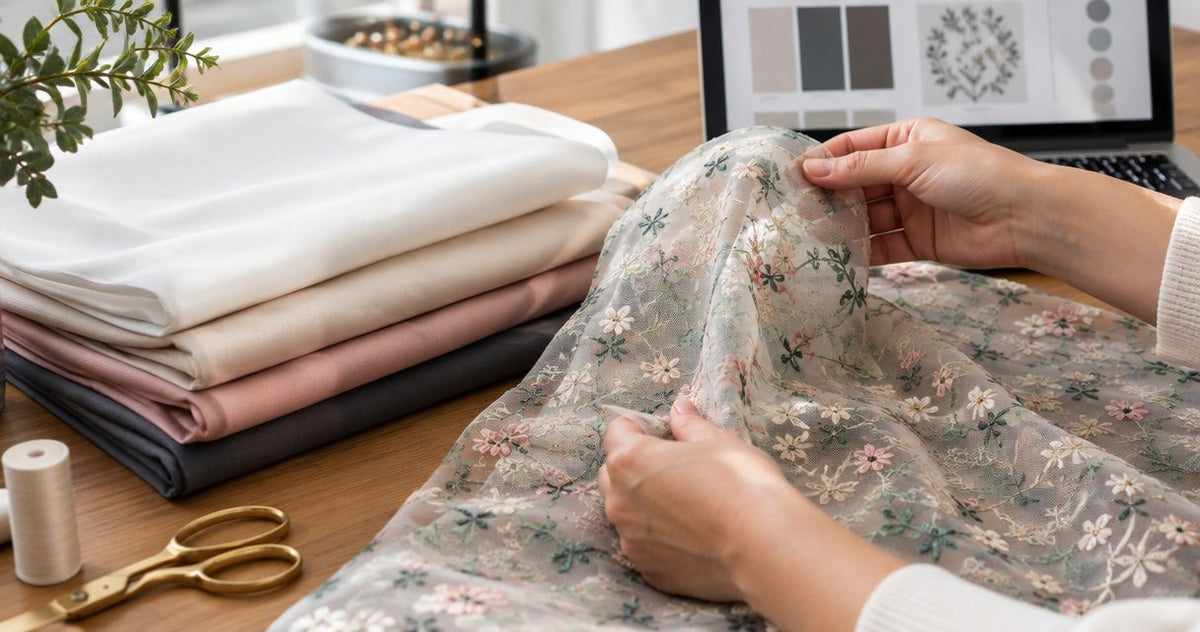
Choose lining for net embroidery fabric by checking coverage, drape and skin comfort together, then judge the colour with the layers held against your body. For your 2026 outfit, approve the net and lining as a pair before your tailor cuts either fabric; a lining that looks right on its own can change the embroidery’s appearance and the finished silhouette.
- Choose lining for net embroidery fabric by testing opacity, drape and comfort together.
- Doeraa serves retail shoppers and boutiques choosing embroidered fabrics for custom outfits.
- Cotton, viscose and satin linings offer different finishes; the actual fabric matters more than its name.
- Confirm lining quantity with your tailor using usable width, garment panels and embroidery placement.
How do you choose lining for net embroidery fabric?
Choose the lining that gives your outfit the intended coverage without fighting the net’s movement. Start with the garment, not the lining colour: a fitted blouse, flowing lehenga and sheer dupatta need different treatment. The guide to choosing embroidered fabric for your next outfit helps you settle that first decision.
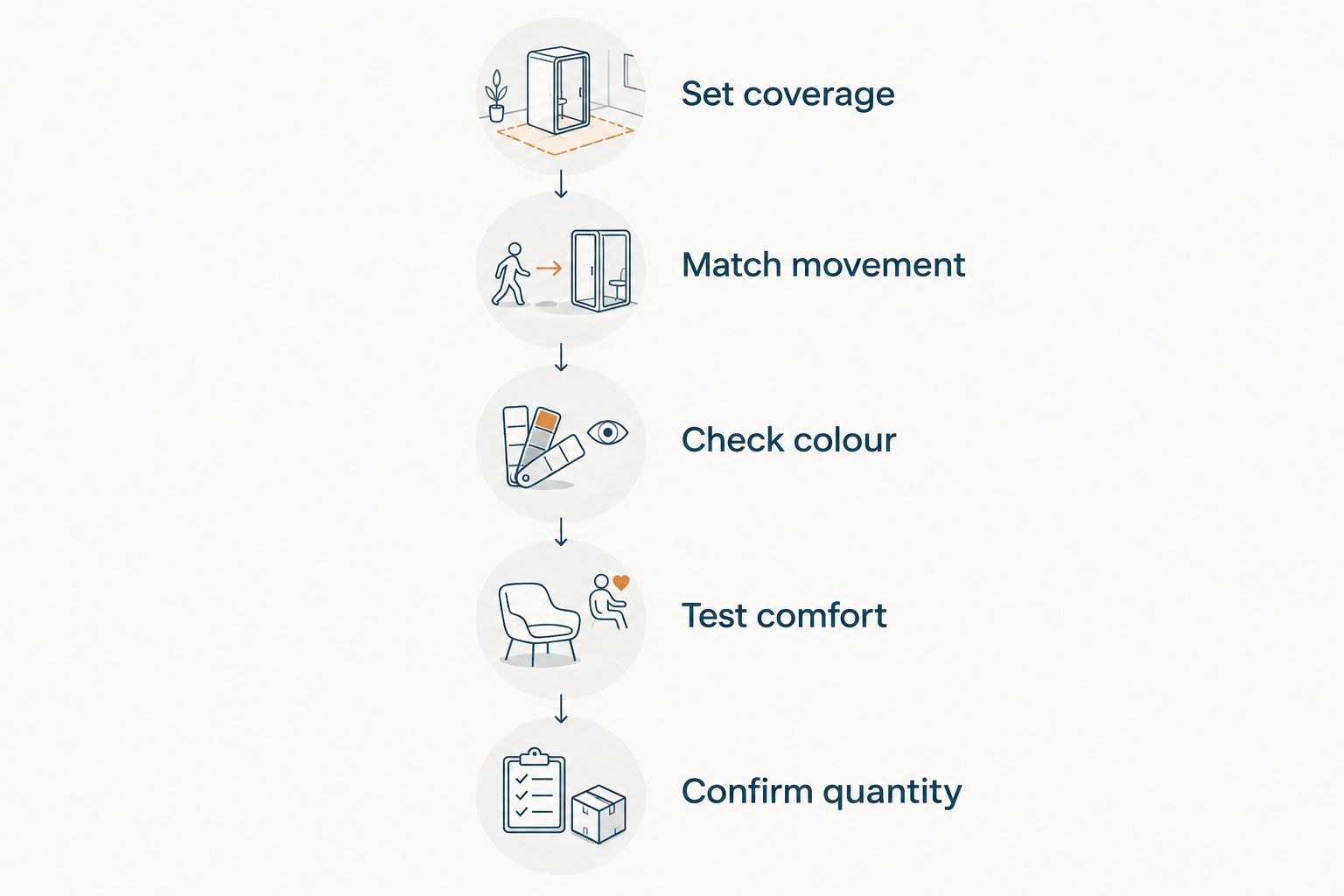
Use this sequence before ordering or cutting:
- Set coverage. Mark which areas should be opaque and which should remain sheer.
- Match movement. Hold the net and candidate lining together vertically, then gather them gently.
- Check colour. Compare the layered fabric against your body and beside the other outfit pieces.
- Test comfort. Check the lining’s skin-facing surface and any exposed embroidery backing.
- Confirm quantity. Ask your tailor to calculate each layer from the finished design and usable width.
Keep the shortlisted layers together while you decide. Comparing net on one screen with a separate lining photograph does not show the combined result, and photographs cannot establish how either material feels against your skin.
Why this matters
Lining is part of what you see through embroidered net, not merely a hidden finishing layer. Its colour becomes the background between motifs, while its weight and construction affect how the outfit hangs.
A lining that works beautifully beneath a gathered skirt can feel restrictive inside a fitted sleeve. For a 2026 occasion outfit, decide how you want to move and feel before choosing the background colour. Embroidery deserves a setting that lets both the design and the wearer feel at ease.
Which lining material should you choose?
Treat cotton and viscose as fibre descriptions and satin as a weave description. Satin is not automatically silk, and a fabric name alone does not establish opacity, weight or care requirements. Ask for the actual composition and inspect the material you intend to use.
| Lining option | Best for | Useful quality | Limitation to check |
|---|---|---|---|
| Cotton lining | A matte background for everyday garments | A non-glossy surface keeps attention on the embroidery | A crisp cotton can resist the flowing movement you want |
| Viscose lining | Garments that need a softer fall | A supple viscose can follow fluid skirt panels | Thin versions still need an opacity check; confirm care instructions |
| Satin lining | A deliberately lustrous background | The smooth, reflective face changes the finish beneath open net | Shine can compete with sequins; fibre content and weight vary |
These are starting points, not interchangeable specifications. Run the same coverage and movement checks on every candidate, including fabrics sold under the same lining name.
Cotton lining: best for a matte background
Choose cotton lining when you want the spaces between embroidered motifs to look understated. Check its softness against your skin, especially at the waist, armhole and neckline.
Do not choose cotton solely because your outfit is for daytime wear. A firm lining can change a soft net skirt’s shape, so hold the full combination in folds before approving it.
Viscose lining: best for a softer fall
Choose a supple viscose lining when your design calls for flowing panels rather than a deliberately crisp outline. Let the layers hang freely instead of judging them flat on a counter.
The limitation is variation: viscose identifies the fibre, not a guaranteed weight or degree of coverage. Confirm the fabric’s care instructions and preparation with your tailor before stitching.
Satin lining: best for a lustrous background
Choose satin when you want the lining’s sheen to remain part of the outfit’s appearance. Compare the shiny face and the reverse beneath your net, because the visible background changes with the surface you present.
Satin is not the default choice for every embellished outfit. Where sequins already provide reflection, a glossy lining adds another visual element; choose it deliberately rather than assuming festive clothing needs more shine.
How should you match lining colour to embroidered net?
Match the appearance of the layered fabric, not the colour name on the listing. Begin with a lining close to the net’s ground colour, then compare alternatives against the embroidery threads and your intended accessories.
A skin-toned lining is useful when you want the mesh to recede visually. Match it to the wearer rather than treating beige as a universal skin tone. A contrasting lining makes the background more visible and becomes part of the design.
Look at the combination in daylight and under the indoor lighting relevant to your outfit. Check a flat section and a fold: overlapping net, concentrated embroidery and reflected light change what you see.
Doeraa offers net embroidery fabric designs such as gold sequins with white thread embroidery on white soft net fabric. For that named combination, compare lining beneath both the white-thread motifs and the open net; neither area alone represents the finished garment.
For online selection in 2026, use product photographs to study motif placement and visible colour relationships. Confirm uncertain details before ordering, and make the final lining decision with the actual fabrics together rather than expecting an exact screen-to-fabric colour match.
Why does the right lining vary between outfits?
The same embroidered net does not need the same treatment in every garment. Your choice changes with these factors:
- Coverage placement: A lined bodice and an intentionally sheer sleeve need different boundaries.
- Silhouette: A close-fitting blouse requires a different movement check from a gathered lehenga.
- Embroidery placement: Dense motifs, open areas and decorated borders need assessment together.
- Surface decoration: Check whether threads, sequins or beads on the reverse touch your skin.
- Colour relationship: A matching, skin-toned or contrasting background changes the visible design.
- Care compatibility: Both layers need an agreed preparation and cleaning approach before construction.
Give your tailor a clear priority when these requirements conflict. If comfortable movement matters more than a crisp outline, say so before the lining is selected; do not leave that decision to the cutting stage.
How should you line a blouse, lehenga or dupatta?
Plan lining by garment section rather than automatically covering every piece. A sheer detail can be intentional, but the wearer and tailor need to agree on exactly where coverage starts and ends.
| Garment | Best for | Lining approach to discuss | Trade-off |
|---|---|---|---|
| Blouse | Targeted coverage and a close fit | Plan bodice, cups or other internal support, sleeves and neckline separately | A lining alone does not replace fitting or structural support |
| Lehenga | A layered skirt with planned movement | Compare the outer net and lining across the intended panels | A lining with a different fall can alter the silhouette |
| Dupatta | Visible transparency and decorative drape | Decide whether it needs coverage at all | Full lining changes the sheer effect and adds another layer |
For a blouse, ask your tailor how seam allowances and closures will look through the mesh. Check arm movement during fitting, and identify any embroidery backing that remains exposed around an unlined sleeve or neckline.
For a lehenga, discuss the lining separately from any underskirt or shaping layer. These components have different jobs; choosing an opaque lining does not by itself establish the skirt’s volume.
For a dupatta, preserve the intended transparency unless coverage is part of your design. Examine the border finish and the reverse of the embroidery before deciding that a full backing is necessary.
How much lining should you buy for embroidered net?
Have your tailor calculate lining separately from the outer net. Matching their lengths without checking the pattern is not a reliable quantity plan, because the usable widths, panel shapes and lined areas can differ.
Bring your measurements, outfit reference and fabric details to the discussion. Your 2026 order checklist should record:
- The usable width of both fabrics, excluding unsuitable edges.
- The final blouse, sleeve or skirt design.
- Which panels require lining and which remain sheer.
- Any border or motif placement restrictions on the outer net.
- Seam, hem, fitting and preparation allowances specified by your tailor.
Ask whether the lining will follow the same panel layout or use a separate construction. Do not add an arbitrary extra length to replace this calculation; an accurate cutting plan is more useful than a general metre recommendation.
What should boutiques confirm before buying in bulk?
Approve a complete fabric pairing before repeating it across customer orders. A lining selected for a photographed sample is not automatically the right choice for every size, silhouette or coverage preference.
Doeraa serves both retail and wholesale fabric buyers. For a boutique’s 2026 enquiry, specify the embroidered fabric, intended garments, required lengths and the lining characteristics you need confirmed; keep assumptions about matching, composition and care out of the order brief.
Use a written pairing record that identifies the actual lining rather than simply saying matching lining. Keep the approved layered reference with the garment instructions, and ask about consistency requirements before committing to a larger purchase.
Can I use the same lining for the blouse and skirt?
You can use the same lining only if it meets the fit, coverage and movement requirements of both garments. Test the blouse against the body and assess the skirt hanging freely; passing either check alone is not enough.
Should I attach the lining directly to the net?
Your tailor should choose the attachment method from the garment design and the behaviour of both fabrics. Joining layers throughout and constructing them separately produce different results, so discuss movement, visible seams and finishing before stitching.
Can embroidery backing still feel uncomfortable through lining?
Lining does not automatically resolve every rough area. Inspect the reverse of the embroidery and check exposed edges, seam positions and unlined sections during fitting rather than relying on the lining fabric alone.
FAQ
What is the best lining for net embroidery fabric?
The best lining for net embroidery fabric provides your required coverage while preserving the intended drape and feeling comfortable against your skin. Compare actual cotton, viscose or satin candidates beneath the net rather than choosing by name alone.
Should lining match the net or the embroidery thread?
Choose lining by the combined appearance of the net, thread and background. Start near the net’s ground colour, then check whether the result gives the embroidery the definition you want.
Is satin better than cotton beneath embroidered net?
Satin is better for a deliberately lustrous background; cotton is a starting point for a matte finish. Compare their actual weight, opacity and movement before selecting either.
Can I leave embroidered net sleeves unlined?
You can leave embroidered net sleeves unlined when intentional transparency suits the design. Check the embroidery’s reverse against your skin and agree on the seam finish with your tailor.
How much lining do I need for a net lehenga?
Your tailor should calculate lining from the skirt pattern, measurements and usable fabric width. Do not assume the outer net and lining require identical lengths.
Does a net dupatta need full lining?
A net dupatta does not automatically need full lining. Full backing changes its transparency and layered feel, so choose it only when that result suits your design.
Can I choose matching lining from online photographs?
Online photographs help you shortlist lining colours but do not establish an exact match. Approve the actual net and lining together before cutting.
One last thing
Check the lining beneath a seam allowance as well as beneath a single layer of net. Overlapping fabric and concentrated embroidery can reveal a different background from the open areas you first admired.
Doeraa is best for shoppers and boutiques choosing embroidered fabrics for custom outfits. Take the same considered approach to the unseen layer: approve the pairing, then let your tailor turn it into the garment you intended.


Leave a comment
This site is protected by hCaptcha and the hCaptcha Privacy Policy and Terms of Service apply.