
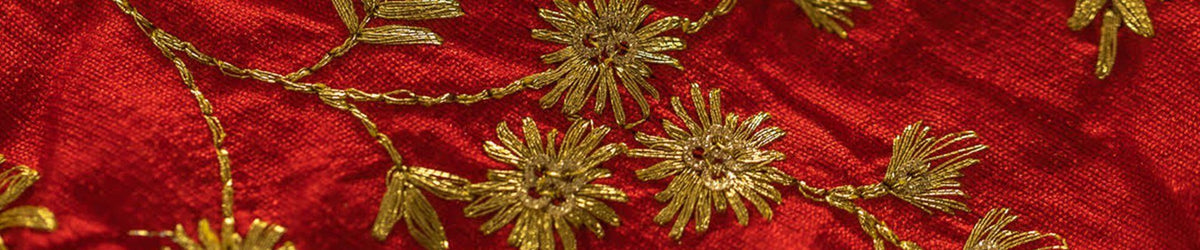
Estimate fabric for lehenga from your measurements, final silhouette, usable fabric width and cutting layout, then have your tailor confirm the order. A generic metre figure is only a starting guide: embroidery direction, borders and separate blouse or dupatta requirements can change what you need.
- Estimate fabric for lehenga from a cutting layout, not a generic length alone.
- Doeraa's sizing guide distinguishes 44-inch and 56–60-inch fabric widths.
- Confirm whether the estimate covers the skirt, blouse, dupatta or the complete outfit.
- Doeraa suits shoppers comparing embroidered fabrics before a tailor-approved order.
Why a metre estimate needs a width
Fabric length tells you only one dimension of the material. The usable width determines how pattern pieces fit beside each other. Two cuts with the same length can offer different layout choices.
When choosing from embroidery fabrics, check the selected product's actual width before asking for a final quantity. A decorative border or unembroidered margin can also constrain placement. Your tailor needs the usable area, not just a category label.
For a 2026 lehenga, keep the quantity decision connected to the final sketch. Changing flare, panels or motif placement can change the layout. An estimate for an earlier design is not automatically valid after those changes.
How do you estimate fabric for lehenga with your tailor?
Use this order to turn a design into a buying quantity:
- Confirm the wearer measurements your tailor needs.
- Finalise the skirt silhouette and construction method.
- Record the actual usable fabric width.
- Identify motif direction, repeats and borders.
- Place every pattern piece in a working layout.
- Separate the needs of skirt, blouse and dupatta.
- Approve the final order in clearly named units.
| Estimating approach | Best for | Useful contribution | Limitation |
|---|---|---|---|
| General sizing guide | Early planning | Shows why width matters | Not a custom cutting instruction |
| Existing garment reference | Explaining the desired outline | Makes shape and coverage visible | Different fabric can require another layout |
| Pattern-based layout | Final quantity approval | Uses actual pieces and usable width | Requires the design to be settled |
| Motif-led layout | Protecting important embroidery | Accounts for placement and direction | Can differ from a plain-fabric layout |
Use the general guide to begin the discussion, then use the layout to finish it. No single figure can account for every custom silhouette. The quantity must correspond to your garment and selected cloth.
Define exactly what you are buying fabric for
State whether the estimate is for the lehenga skirt alone or the complete outfit. A blouse and dupatta have their own requirements. Do not assume a skirt figure includes them.
If more than one fabric is involved, create a separate line for each. The outer skirt, lining, blouse and dupatta can have different usable widths and layout constraints. Combining them into one vague total makes ordering harder to check.
For your 2026 order sheet, use the garment component as the label. A clear record should still make sense when the fabric arrives and someone else receives it. Product names and quantities should remain connected.
Give the tailor the final silhouette
Share the desired outline, skirt length and construction preference. A panelled design and a more gathered arrangement use fabric differently. The tailor should determine the pattern that delivers the agreed shape.
Show both front and side references where they matter. A photograph can hide internal support, so ask which parts of the reference come from fabric and which come from construction. This prevents a quantity being calculated for the wrong result.
Do not buy first and hope that the available cut will dictate a satisfactory garment. If you are working within a fixed amount already owned, tell the tailor that at the start. That is a different design brief from calculating a new order.
Record usable width from the actual listing
Check the width attached to the selected product. Doeraa's displayed sizing guide distinguishes 44-inch fabric from 56–60-inch fabric, but those are guide categories. They are not specifications for every item on the site.
Ask whether the stated measurement includes areas that cannot serve your intended cut. A border can be valuable decoration and still reduce the area available for an unrelated panel. The answer depends on the garment layout.
Keep these width notes with the fabric reference:
- Stated overall width.
- Confirmed usable width where different.
- Position of any border.
- Unembroidered margins relevant to the design.
- Motif direction across the supplied width.
Do not convert uncertainty into an assumed measurement. If the listing does not answer the question, clarify before the tailor finalises the quantity.
Mark the embroidery direction
Identify whether the design has an obvious top and bottom. Leaves, trails and larger motifs can have a visible orientation. Pattern pieces cannot always be rotated just to fit a shorter cut.
Ask your tailor to keep the pattern's grain requirements in the layout as well. Decorative direction does not replace construction requirements. Both constraints need to work together.
For a 2026 embroidered lehenga, record which motifs must remain intact. That decision can change where pieces are positioned. A quantity calculated without it might not protect the detail you chose the fabric for.
Plan the border at the hem
Show the tailor which border arrangement you want in the finished skirt. A straight border on the roll does not automatically follow every curved hem. The intended construction needs to be clear before the fabric-length calculation.
Confirm whether the border is part of the selected fabric or a separate component. Do not assume an image of a decorated edge represents a complete garment-ready set. The actual listing determines what is supplied.
If the design cannot provide the border arrangement you imagined, revise the plan before ordering. A different layout is a design decision; an unsupported assumption is an ordering risk.
Have the tailor lay out every piece
A useful estimate shows how the pieces fit inside the usable width. It should account for the full skirt pattern and any outer-fabric details. The tailor should decide the appropriate construction allowances rather than receiving a made-up universal percentage.
Ask whether matching across important seams is included. If you want a visible trail to connect at a panel join, say so now. Adding that request after purchasing can change the cutting problem.
A final layout review should answer:
- Does every piece fit within the confirmed usable width?
- Are grain and motif directions preserved?
- Are borders positioned as agreed?
- Are the intended visible motifs protected?
- Does the quantity cover only the named components?
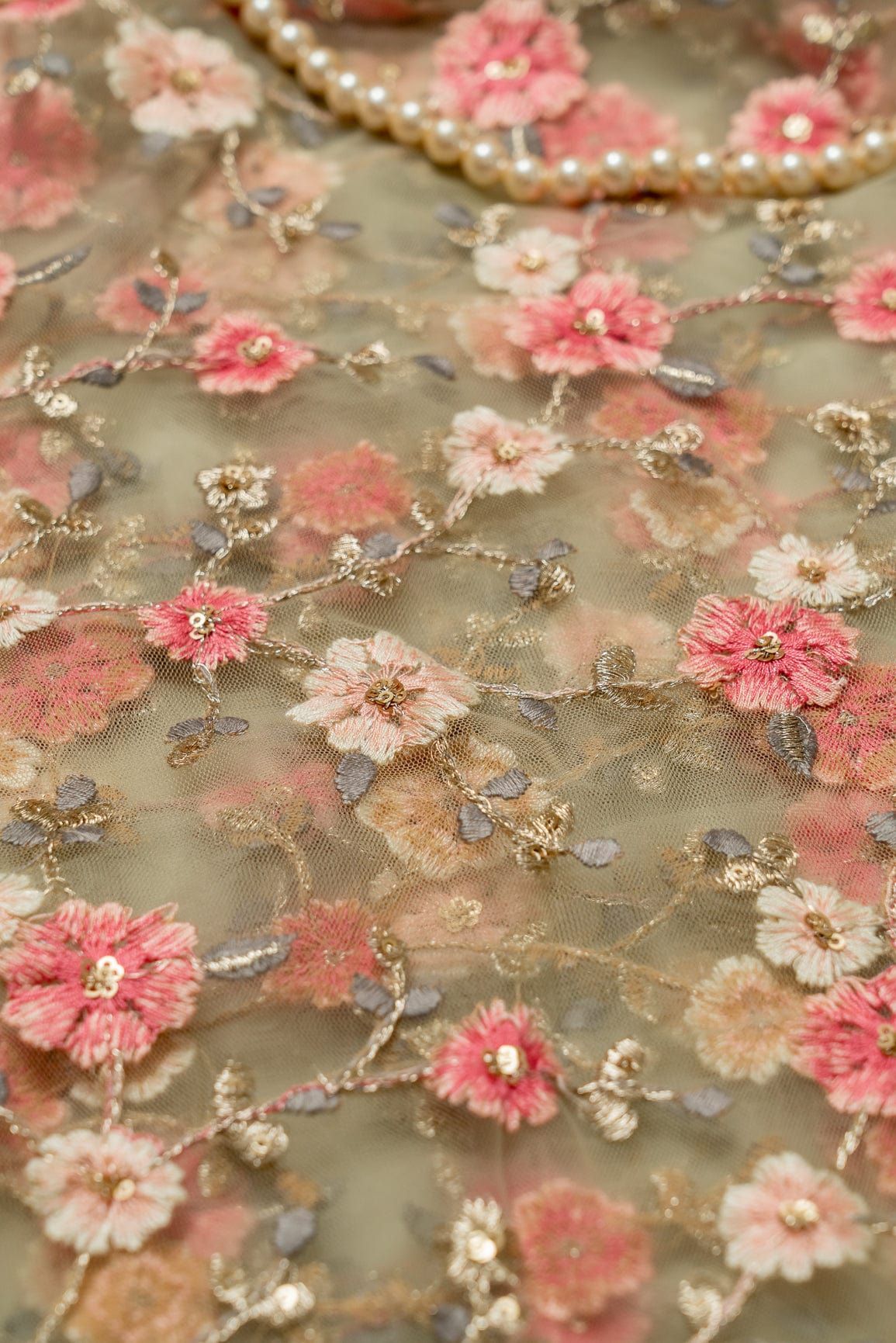
Doeraa's fabric range provides options to assess against these questions. The advantage is design choice; the limitation is that an online listing does not calculate a custom garment pattern for you.
Keep lining as a separate requirement
The lining has its own width, material and construction needs. Do not copy the outer-fabric quantity automatically without asking the tailor. The two layers do not necessarily use the same pattern arrangement.
Review how the lining affects visible colour if the outer fabric is sheer. Net embroidery fabric should be considered with its intended underlayer. The finished appearance is a combination, not the outer material alone.
Check compatible care as part of the garment plan. A quantity estimate is not complete if the selected materials cannot be combined in the way you intend. Ask the tailor or appropriate care professional to assess the actual fabrics.
Confirm units and the final order
Write the approved amount in a clearly named unit. Keep width and length separate so neither can be mistaken for the other. If the seller's ordering unit differs from your tailor's working unit, clarify the conversion before checkout.
Match each quantity to the exact product reference and component. This matters when similar fabrics or colours appear in the same enquiry. An order should not depend on interpreting a photograph caption or an informal nickname.
For your 2026 purchase, retain the approved layout or written recommendation. If the design changes before cutting, revisit that recommendation. A recorded estimate is useful only while its assumptions still apply.
Can I use a general lehenga fabric chart?
Use a general chart for early orientation, not as the final instruction for every custom lehenga. It does not know your measurements, usable width, border arrangement or motif-placement requirements. Ask the tailor to confirm the selected fabric against the actual pattern.
The chart on Doeraa's site demonstrates that width is a relevant part of garment estimates. It should prompt a product-specific check. It does not remove the need for a final cutting plan.
Does more flare always mean the same extra length?
There is no universal extra length that applies to every increase in flare. The result depends on the pattern, usable width and arrangement of pieces. Ask your tailor to recalculate the layout rather than adding an invented standard allowance.
The same applies when you change panel count or want embroidery to match differently. A visual design change can become a cutting change. Keep quantity decisions tied to that change.
Why does fabric quantity vary?
The main drivers are:
- Measurements: the garment dimensions your tailor works from.
- Silhouette: the finished outline and flare.
- Pattern method: how the skirt is divided and assembled.
- Usable width: the area available for each piece.
- Embroidery: repeat, direction and matching priorities.
- Components: whether blouse, dupatta or other pieces are included.
These are the reasons to request a specific estimate rather than a universal answer. A more detailed brief gives your tailor a more useful basis for the calculation.
FAQ
How many metres of fabric do I need for a lehenga?
The required length depends on measurements, silhouette, usable width and the embroidery layout. Have your tailor calculate the actual pattern arrangement before ordering.
Does a lehenga estimate include the blouse and dupatta?
Do not assume it includes separate components. State whether you need the skirt alone or the full outfit and record a quantity for each selected material.
Why does fabric width affect the quantity?
Fabric width affects how pattern pieces fit beside each other. The same length at a different usable width can require another cutting arrangement.
Should I add a fixed extra amount for embroidery matching?
Do not use an invented fixed allowance. Ask your tailor to place the motifs and calculate the quantity from the approved layout.
Can I use the same quantity for lining and outer fabric?
Do not assume identical quantities. The lining's width and construction requirements need their own assessment by the tailor.
What should I send my tailor before buying lehenga fabric?
Send the garment reference, product details, usable width and embroidery or border views. State the components required and any placement you want preserved.
One last thing: ask what the estimate assumes
Before finalising your 2026 order, ask your tailor to name the width, silhouette and components behind the recommendation. If one of those changes, the estimate needs another check. This is a clearer safeguard than buying extra without a reason.
Doeraa fabric for lehenga suits shoppers comparing decorative designs before a tailor-approved cutting plan. Let the chosen pattern and confirmed material details settle the quantity.


コメントを書く
このサイトはhCaptchaによって保護されており、hCaptchaプライバシーポリシーおよび利用規約が適用されます。