

Choose embroidered fabric for a summer kurta by checking the base cloth, embroidery coverage and lining needs before choosing the colour or motif. For everyday wear, start with cotton options and a relaxed cut; for an occasion kurta, assess the embroidered cloth and its lining together, because a light-looking surface does not establish how the finished outfit will feel.
- Choose embroidered fabric for a summer kurta by checking the base, lining and embroidery coverage together.
- Doeraa suits shoppers comparing embroidered fabric designs for a custom outfit, with retail and wholesale buying needs.
- Cotton is a practical starting point for everyday kurtas; sheer fabrics need a separate lining decision.
- Confirm usable width and your tailor’s cutting layout before choosing a fixed-length cut piece.
How do you choose embroidered fabric for a summer kurta?
Choose for the finished kurta, not just the fabric photograph. Start with where you will wear it, then check the base fabric, the placement of embroidery and the layers your design requires. A workday kurta and an evening celebration outfit ask different things of the same cloth.
When browsing Doeraa, use the fabric name and embroidery details to build your shortlist. For your summer 2026 outfit, take that shortlist to your tailor before committing to a fixed-length piece.
| Fabric option | Best for | What to assess | Main limitation |
|---|---|---|---|
| Small floral embroidery on navy blue pure mul cotton | Shoppers starting with a cotton everyday kurta | Opacity, embroidery coverage and the proposed silhouette | The cotton label alone does not establish weight or lining needs |
| Embroidered mul Chanderi silk | Shoppers considering a sheer, decorative occasion kurta | Drape with the intended lining and the embroidery’s reverse | Sheerness adds a layering decision |
| Embroidered viscose georgette | Shoppers seeking a fluid-looking occasion silhouette | Actual drape, transparency and support for the embroidery | Semi-sheer cloth needs an opacity check |
| Embroidered soft net | Shoppers planning a decorative outer layer | The underlying fabric and how the layers move together | The open net structure does not provide coverage by itself |
These are starting points, not guarantees of comfort. Check each specific fabric rather than treating every version of a fabric type as identical.
Why this matters
Embroidery changes more than the appearance of a kurta. Dense stitching, beads, sequins and borders add material to the base and influence where you can place seams, folds and openings.
Your summer 2026 shortlist should therefore answer a practical question: does this combination of cloth, decoration, lining and cut suit your day? A delicate floral trail can carry the design without covering every panel, while a heavily decorated surface needs closer assessment before cutting.
Start with the base cloth and the layers you will wear
Cotton: best for an everyday starting point
Cotton is a sensible place to begin when choosing a summer kurta for regular wear. Look beyond the fibre name, though: fabric construction, thickness, embroidery coverage and the finished fit still affect comfort.
Ask whether the selected cloth provides the coverage you want without another full layer. If it needs lining, assess that combination before ordering rather than assuming a cotton label settles the decision.
Choose cotton for the everyday shortlist, then verify the actual cloth. Avoid selecting it solely because the product name contains a familiar fibre.
Mul Chanderi silk: best for assessing a decorative occasion kurta
The supplied mul Chanderi silk descriptions identify the fabric as lightweight and sheer. That makes the lining decision part of choosing the fabric, not a detail to leave until stitching.
Examine the embroidery against the proposed underlayer. A pale lining and a contrasting lining change how the same motif reads, so choose the pair together rather than judging the outer cloth alone.
Viscose georgette: best for exploring a fluid silhouette
The supplied viscose georgette descriptions describe a lightweight, semi-sheer cloth with a grainy feel. Consider it when your design calls for a fluid effect, but ask to see how the specific embroidered fabric falls.
Decoration changes the behaviour of the base. Check whether the embroidered areas hang evenly and whether the intended lining follows the same shape without pulling.
Soft net: best for a planned outer layer
Treat embroidered soft net as part of a layered outfit. Decide which fabric will sit underneath, where the layers will join and whether you want the sleeves to remain sheer.
The advantage is a clearly visible embroidered surface; the trade-off is that the outer layer does not resolve coverage or skin contact. Choose the underlayer before approving soft net for a summer kurta.
Why summer kurta comfort varies
No fabric name answers every comfort question. Use these factors to compare your summer 2026 choices:
- Base cloth: Check the listed fabric type and assess its actual thickness, transparency and feel.
- Embroidery coverage: Compare open spaces with densely worked areas, especially across the torso and sleeves.
- Embellishments: Inspect beads, sequins and raised stitching where the garment will touch your skin.
- Lining: Assess the outer cloth and lining as the combination you will actually wear.
- Silhouette: Give your tailor a clear brief about fit, sleeve shape and movement rather than choosing cloth in isolation.
- Wear setting: Separate daily commuting and outdoor plans from shorter indoor occasions when setting your priorities.
A beautiful motif earns its place when the finished garment works around it. Do not accept an uncomfortable sleeve or awkward seam simply to preserve a photograph’s arrangement.
Check embroidery placement before you choose the design
Start by identifying where you want the embroidery to draw attention. A neckline, sleeve edge or hem gives your tailor a different cutting problem from an all-over repeated motif.
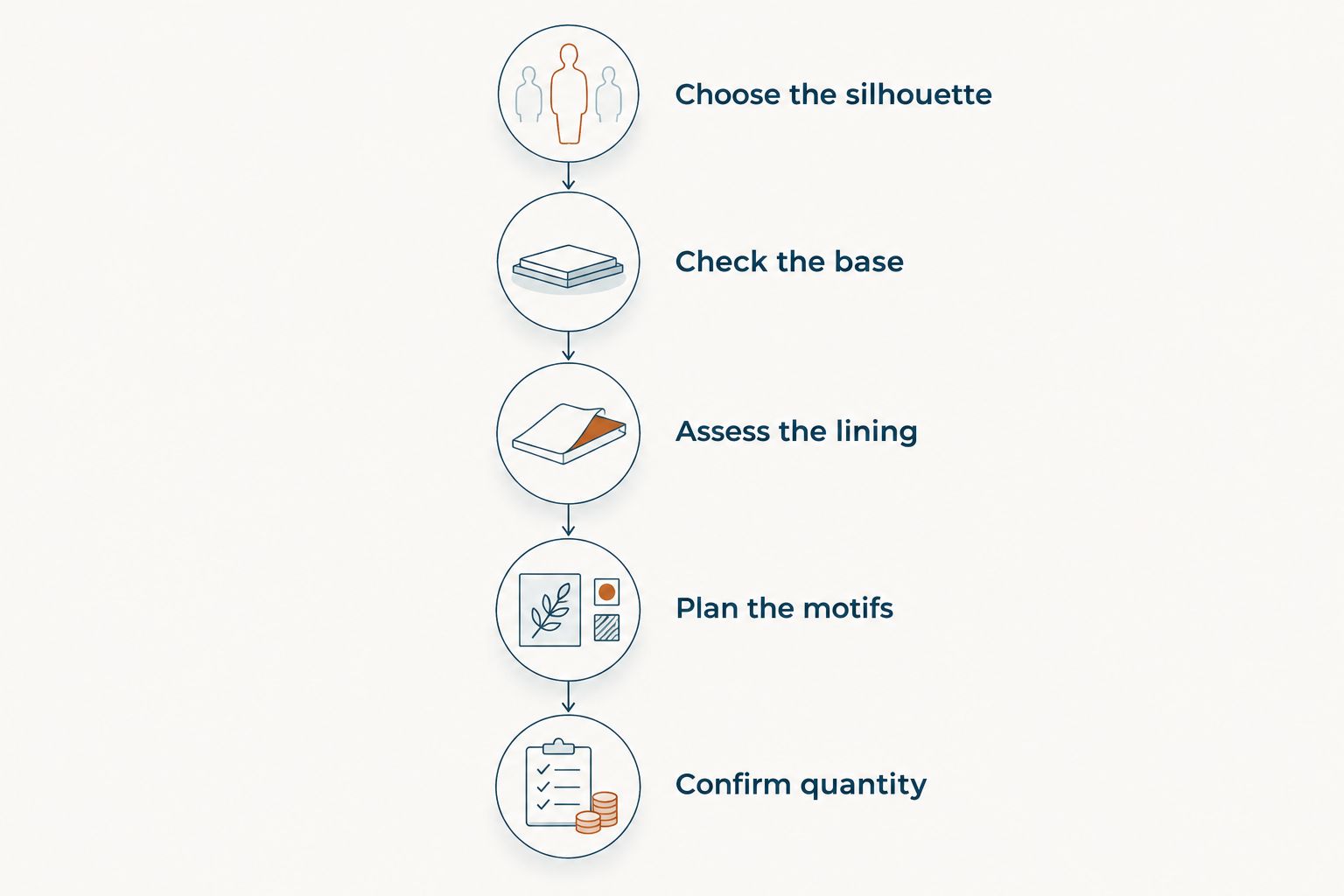
Use this sequence before ordering:
- Choose the silhouette. Decide on the kurta length, sleeve shape, neckline and side openings with your tailor.
- Check the base. Confirm the listed fabric and ask about opacity wherever the photographs leave uncertainty.
- Assess the lining. Decide which sections require coverage and inspect the proposed layers together.
- Plan the motifs. Mark where borders, prominent flowers and directional patterns should sit.
- Confirm quantity. Ask your tailor to approve the usable width and cutting layout before selecting the length.
For a straight kurta, ask where the side slits will meet the embroidery. For a flared design, ask how the motif changes across joined panels; a directional pattern needs deliberate orientation rather than an automatic layout.
Also check the neckline opening. A prominent motif placed directly where your tailor must cut is not a finished design decision, even if it looks appealing in an uncut fabric photograph.
Use product photographs to ask better questions
Look for both a view of the overall design and a closer view of the work. The wider view helps you judge spacing; the detail view helps you identify thread, sequins, beads and the relationship between embroidery and base cloth.
A photograph does not establish every detail of the fabric in your hand. Ask for clarification when you cannot judge transparency, the reverse of the embroidery or how the cloth falls, and do not expect an exact colour match between a screen and the delivered material.
Doeraa is best for shoppers comparing embroidered fabric designs for a custom outfit. The practical limit is the same as any online fabric decision: you still need to confirm the details that your particular pattern requires.
For a summer 2026 occasion kurta, the mul Chanderi options below are design references to assess with your tailor, not promises that either fabric will suit every cut. Both titles specify floral leafy embroidery with multi thread and sequins; the fabric descriptions identify a lightweight, sheer base.


Choose between these colour directions only after deciding on the underlayer and embroidery placement. Neither colour establishes breathability, opacity or the amount you need.
How much embroidered fabric should you order for a kurta?
Order the length your tailor confirms for the specific width and pattern. Body measurements alone do not settle the quantity: sleeves, flare, borders and motif alignment also use cloth.
The supplied cut-piece listings include lengths of 1 metre, 2 metres and 2.50 metres. These describe particular pieces, not standard kurta requirements; a 2-metre piece is not automatically enough because another garment used that length.
Before choosing a cut piece, send your tailor the product details and ask for a layout that includes the front, back and sleeves. Confirm whether the design needs an uninterrupted panel or whether joins fit the intended look.
Can you wear sequins on a summer kurta?
Sequins belong on a summer kurta when the finished fabric and placement suit your wear setting. Check the reverse of the embellished area and avoid placing uncomfortable edges against the skin.
For regular wear, start by comparing less densely decorated designs. For an occasion, assess the extra decoration alongside the lining and silhouette rather than choosing sparkle first and solving comfort later.
Should a summer kurta have lining?
Add lining where your chosen fabric and preferred coverage require it, not automatically across every panel. Ask your tailor whether the body, sleeves or another section needs a separate layer.
Try to resolve this before ordering the outer fabric. Lining affects the finished appearance and feel, and it also needs its own quantity plan.
Buying for yourself or planning a boutique order?
For your own kurta, take one clear design brief to your tailor: intended occasion, silhouette, coverage and embroidery placement. This keeps the decision focused when several colours or motifs appeal to you.
For a boutique enquiry with Doeraa, organise the same information by design and planned garment. Ask about the required fabric lengths, usable width and whether the proposed order can be supplied as the continuous pieces your cutting plan needs; do not assume separate cut pieces form a matching run.
Keep the product reference attached to each enquiry. For summer 2026 planning, a clear specification is more useful than a broad request for summer embroidery fabric.
FAQ
What embroidered fabric should I choose for an everyday summer kurta?
Start with cotton options and check the actual cloth, embroidery coverage and lining needs. A cotton label alone does not establish the comfort of the finished kurta.
Is mul Chanderi silk suitable for a summer kurta?
Mul Chanderi silk is an option to assess for a decorative summer kurta, with sheerness making the lining decision essential. Check the embroidered cloth and intended underlayer together.
Is soft net a good choice for a summer kurta?
Soft net suits a planned decorative outer layer rather than a coverage decision on its own. Choose the underlying fabric and decide how the layers will join before ordering.
How do I know whether embroidered fabric needs lining?
Check the fabric’s transparency against your preferred coverage and inspect the reverse of the embroidery. Ask your tailor which garment sections need a separate layer.
Will a 2-metre cut piece be enough for my kurta?
A 2-metre cut piece is not automatically enough for a kurta. Your tailor must confirm the usable width, measurements, sleeves and motif layout before you order.
Can I choose embroidered fabric from photographs alone?
Use photographs to shortlist designs, then clarify details they do not establish. Confirm opacity, drape and embroidery placement, and do not assume an exact screen-to-fabric colour match.
What should a boutique confirm before ordering embroidered kurta fabric?
Confirm the fabric reference, required lengths, usable width and cutting requirements for each design. Ask whether the order can meet any need for continuous pieces before approving it.
One last thing
Place the sleeve pattern before approving the final fabric choice. A design that works beautifully across the kurta front still needs to work around the elbow, cuff and sleeve seam.
Ask your tailor to mark those pieces alongside the front and back. That simple check keeps the embroidery part of the garment’s design rather than a detail the cutting has to work around.


コメントを書く
このサイトはhCaptchaによって保護されており、hCaptchaプライバシーポリシーおよび利用規約が適用されます。