
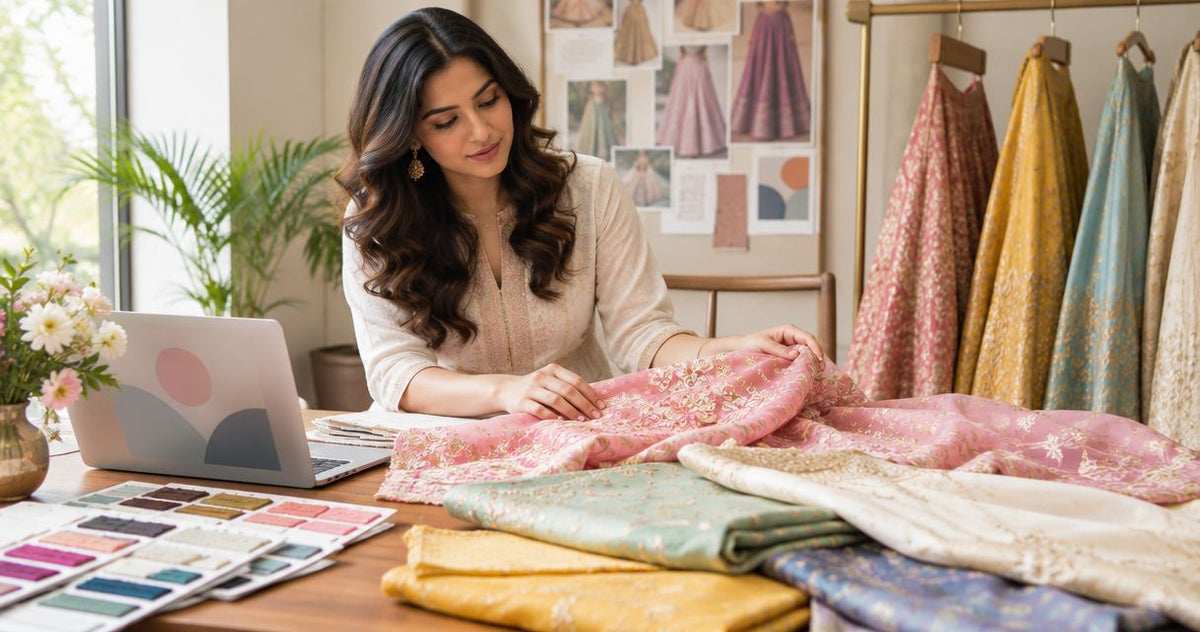
Choose fabric for lehenga by the finished outfit’s drape, lining and embroidery placement, not by colour alone. For daytime celebrations, compare how each shortlisted fabric falls with its intended lining, then confirm the cutting layout with your tailor; a delicate-looking surface does not establish how light the finished lehenga will feel.
- Choose fabric for lehenga by drape, lining and embroidery placement before deciding on colour.
- Compare Mul Chanderi, georgette and soft net against your intended silhouette, not a universal best-fabric ranking.
- Doeraa serves shoppers and boutiques choosing embroidered fabrics; assess each design against your outfit plan.
- Confirm usable width and motif direction with your tailor before ordering a cut piece.
Why this matters
A daytime lehenga needs to work while you walk, sit and spend time at the celebration—not just while you stand for a photograph. The outer fabric, lining, embroidery and any added skirt support all contribute to that experience.
For your 2026 celebration, begin with the outfit you want to wear rather than a fabric name you have heard recommended. Doeraa sells embroidered and dyed fabrics to retail shoppers and boutiques, so distinguish the fabric you are choosing from the finished garment your tailor will construct.
Doeraa is a fit for shoppers and boutiques buying embroidered fabrics rather than finished lehengas. Your next decision is whether the selected fabric supports your particular shape, coverage and movement requirements.
How do you choose fabric for lehenga for daytime celebrations?
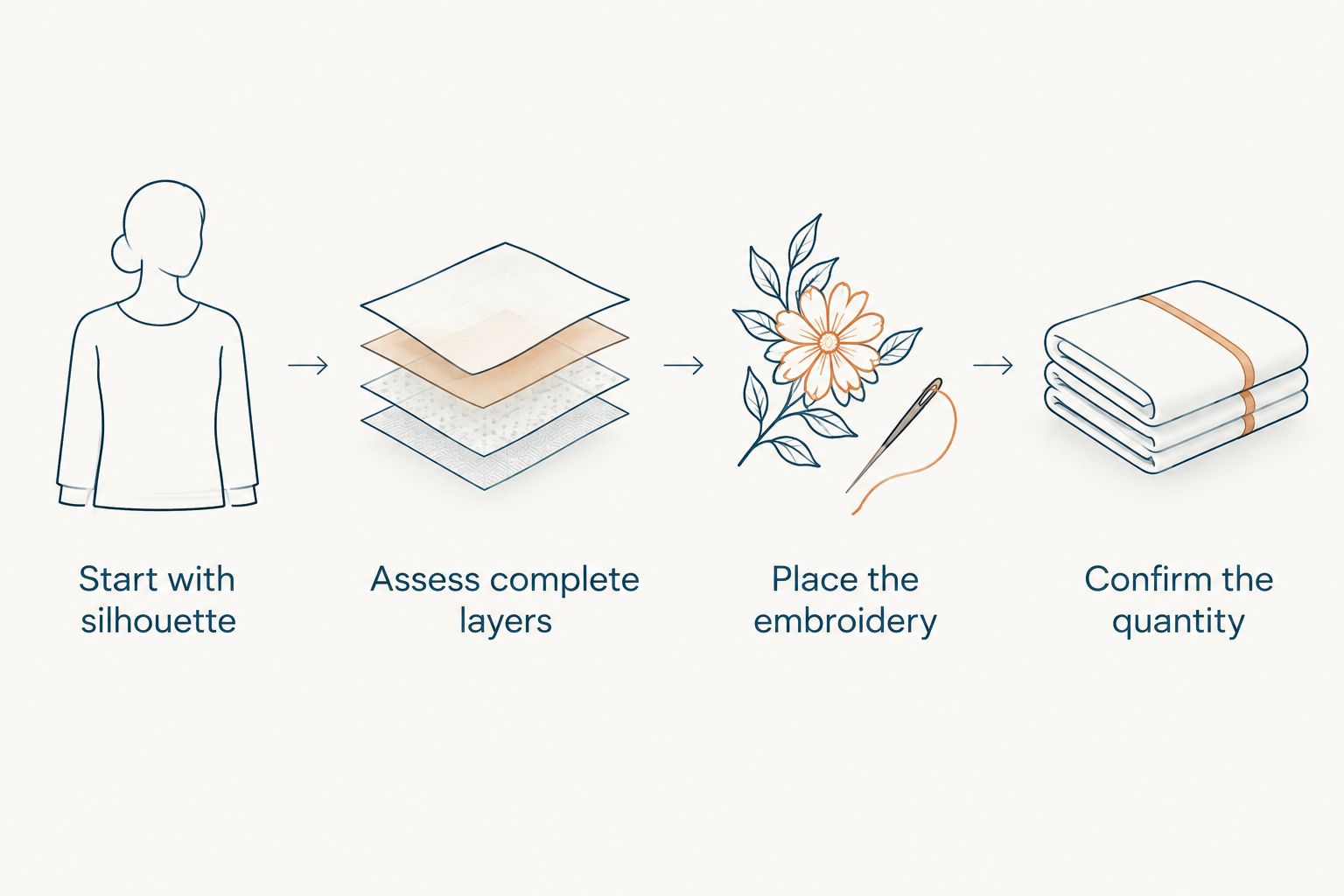
Use this sequence: decide the silhouette, assess the fabric with lining, place the embroidery, and only then approve the quantity. This keeps an attractive motif from becoming a difficult cutting compromise.
| Fabric option | Best for | What it contributes | What to check before choosing |
|---|---|---|---|
| Mul Chanderi | An airy-looking embroidered outfit | A sheer surface that lets embroidery remain a focal point | Coverage, lining and the actual fall of the selected fabric |
| Viscose georgette | A fluid skirt silhouette | A lightweight, semi-sheer base with a grainy texture | Whether embroidery and lining change the movement you want |
| Soft net | An embroidered overlay | An open base through which the underlayer contributes to the design | Lining colour, coverage and the position of embroidered areas |
| Organza | A more defined outline | A crisp character rather than a close, fluid fall | Whether the chosen fabric and construction suit sitting and movement |
| Viscose zari tissue | A visibly shimmering outfit | Surface shine that becomes part of the overall design | Transparency, embellishment and the effect in daylight |
These are starting points, not guarantees about every fabric carrying the same name. Finishing, embroidery and construction change the result. Choose the individual fabric with your tailor, not the category label in isolation.
Start with the silhouette
Tell your tailor whether you want a skirt that falls close, opens softly or holds a more defined outline. Bring an outfit reference, but describe the movement you like as well as the appearance.
A still photograph cannot show the whole construction. Ask which parts of the reference come from the outer fabric and which depend on lining, panels or added support.
Assess the complete layers
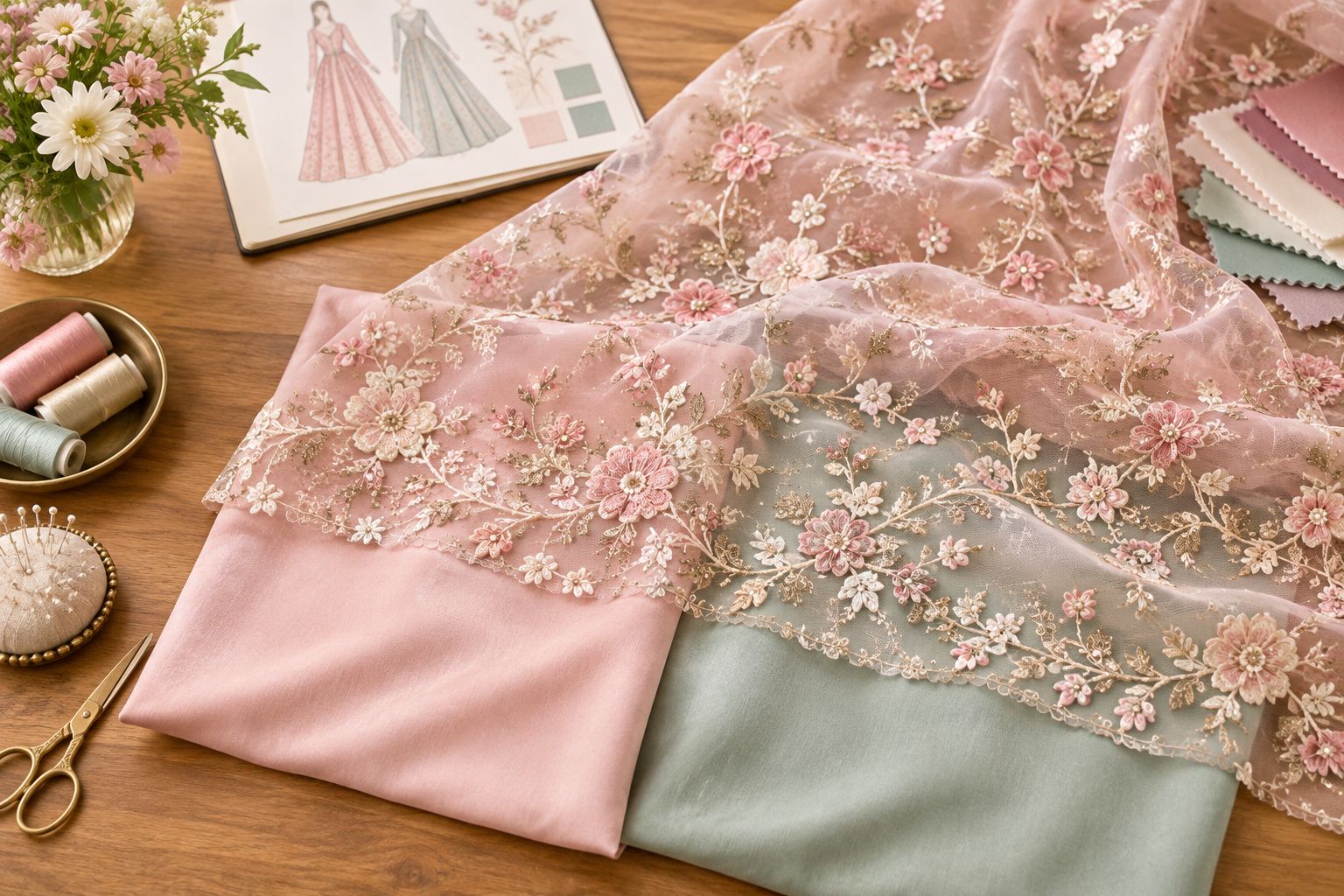
Review the outer fabric beside the intended lining before approving either. With sheer materials, the lining affects coverage and the colour you see through the surface.
For a daytime event, also discuss the blouse and dupatta. A comfortable skirt does not resolve a blouse that feels restrictive or a dupatta that needs constant adjustment.
Place the embroidery
Identify where the main motifs, borders and quieter spaces should sit on the garment. Keep the waist seam, panel joins and hem in that discussion.
A floral motif deserves room to read clearly. Do not approve a cutting plan that divides the detail you chose the fabric for without first seeing the proposed placement.
Confirm the quantity
Ask your tailor to calculate the order from your measurements, finished length, panel layout and usable fabric width. Include the blouse or dupatta only if those pieces will come from the same fabric.
Do not turn a general online metre recommendation into an order. Embroidered borders and directional motifs can restrict how the pattern pieces fit.
Choose fluid fabric when movement leads the design
Best for: a lehenga intended to fall and move rather than hold a firm outline. Start by assessing a georgette option with your tailor, then check whether its embroidery supports the movement you want.
Georgette’s lightweight, semi-sheer character makes the lining decision important. Do not assume the finished skirt will behave like an unlined length held up in a photograph.
The advantage is the opportunity to build a fluid silhouette around the fabric’s fall. The limitation is that embroidery, seams and underlayers remain part of the finished result; the base fabric alone does not settle the decision.
For a 2026 daytime outfit, ask to see the proposed fabric gathered or folded over the intended lining. Assess the fall before choosing how much flare to add.
Choose a sheer embroidered fabric when layering leads the design
Best for: an outfit where embroidery and the underlayer work together. Mul Chanderi and soft net deserve separate assessment rather than being treated as interchangeable sheer fabrics.
The supplied Mul Chanderi descriptions identify a lightweight, sheer fabric. Soft net provides an open background for embroidery. In both cases, look at the base between the motifs rather than judging coverage from the most densely worked section.
The advantage is that lining becomes part of your design palette. The limitation is that the outer fabric cannot be assessed properly without it. A lining that changes the visible colour or obscures a delicate motif changes the outfit you are planning.
Ask your tailor to hold the combination flat and in folds. Check both views before approving it for the skirt.
Choose crispness or shimmer deliberately
Best for: an outfit with a defined outline or a visibly lustrous surface. Organza and zari tissue serve different design intentions, so choose the effect first.
Organza is associated with crispness; zari tissue brings shimmer into the surface. Neither description establishes the comfort, weight or drape of every embroidered version.
The benefit is a clear visual direction. The trade-off is that structure or shine becomes a substantial part of the outfit, not just a small detail. If you want the embroidery to be the main feature, assess whether the base supports that intention.
For a daytime celebration in 2026, inspect the selected material in daylight where possible. Decide whether you like its surface across a full skirt, not only in a close-up.
Why daytime lehenga fabric suitability varies
The same fabric category can lead to different finished outfits. These factors explain why a shortlist still needs a garment-specific check:
- Embroidery placement: Borders, large motifs and directional designs influence where your tailor can cut panels.
- Lining: The underlayer affects coverage and the visible appearance of sheer fabrics.
- Skirt construction: Panels, gathers and added support contribute to the final outline and movement.
- Usable width: The width available for the pattern matters more than the fabric name when estimating quantity.
- Outfit balance: The blouse and dupatta contribute to how the complete ensemble feels and functions.
- Surface detail: Thread, sequins, beads and zari create different visual effects; inspect the actual combination rather than assuming all embroidery behaves alike.
Select the complete outfit system, not an isolated swatch. A small fabric sample helps with colour and texture, but your tailor still needs to plan the full skirt.
How should you assess colour and embroidery online?
For your 2026 shortlist, use product photographs to inspect separate features: the base colour, thread colour, reflective details, motif spacing and border position. A close-up answers different questions from a wider fabric view.
Do not expect a screen to establish an exact colour match. If the lehenga must coordinate with an existing blouse, dupatta or family outfit, explain that requirement before ordering and ask how to assess the combination.
At Doeraa, compare the stated fabric and embroidery details with the photographs rather than treating a colour name as the full specification. Ask for clarification wherever the information leaves your tailoring decision unresolved.
A practical review includes:
- Base view: Look at the fabric visible between embroidered areas.
- Motif view: Check the shape, direction and spacing of the design.
- Border view: Establish which edge carries the border and how it would meet the hem.
- Layered view: Ask how the outer fabric looks over your intended lining.
How much fabric should you order for a daytime lehenga?
Order the quantity your tailor calculates from the actual cutting layout, not a standard lehenga allowance. Body measurements, skirt length, flare, usable width and embroidery direction all belong in that calculation.
Cut-piece lengths describe the material, not the garment they will make. The supplied Doeraa product titles include a 0.75 metre red tissue organza cut piece, a 2 metre bottle green soft net cut piece and a 3.75 metre olive soft net cut piece. None of those lengths alone establishes suitability for your full lehenga.
Before ordering, send your tailor the exact product details and ask:
- Does the stated length cover the approved pattern at the confirmed width?
- Can the design remain in the intended direction across all panels?
- Does the border placement work with the finished skirt length?
- Are the blouse and dupatta included in this estimate or planned separately?
- What extra fabric does this specific layout require for matching motifs?
Do not join separate cut pieces on the assumption that the embroidery will align. Confirm the design and cutting plan first.
What should boutiques confirm before a bulk enquiry?
Boutiques planning 2026 daytime occasionwear need a repeatable garment brief, not just a preferred colour family. Record the exact design, base fabric, lining intention and embroidery placement for each proposed outfit.
When you enquire with Doeraa about embroidered fabrics in bulk, specify whether you need material for repeated versions of one design or different fabrics for individual clients. Ask how the proposed quantities will be supplied and request confirmation of the details your cutting plan depends on.
Keep retail and boutique decisions connected: the same lining and placement questions apply to a single outfit and a wider collection. A larger order does not remove the need to approve the garment layout.
Can I wear sequins on a lehenga during the day?
Yes—choose sequins according to the effect you want rather than treating them as evening-only decoration. Assess their placement alongside threadwork, the base fabric and the rest of your outfit in daylight.
Should I choose the lehenga fabric before the blouse?
Choose the main silhouette first, then coordinate the skirt, blouse and dupatta before ordering. If you already own the blouse, use it as a fixed requirement when assessing colour, embroidery and lining.
FAQ
What's the best fabric for lehenga for a daytime wedding?
The best fabric for lehenga is the individual fabric that suits your intended drape, lining and embroidery layout. Compare fluid, sheer and crisp options against your outfit plan rather than choosing by fabric name alone.
Is soft net suitable for a daytime lehenga?
Soft net suits an embroidered overlay when the lining and construction meet your coverage and silhouette requirements. Assess the fabric over its intended underlayer before approving it.
Is georgette better than organza for a lehenga?
Georgette is the starting point for a fluid silhouette, while organza suits a crisper design direction. Check the selected embroidery and complete construction before deciding between them.
Can I use Mul Chanderi for a daytime lehenga?
Mul Chanderi belongs on the shortlist when you want a sheer, airy-looking embroidered outfit. Confirm its fall and coverage with the lining and skirt construction your tailor proposes.
How many metres of fabric do I need for my lehenga?
Your tailor should calculate the quantity from measurements, skirt length, flare, usable width and motif placement. A cut-piece length does not by itself establish whether it will make your garment.
How do I choose a lining colour for embroidered net?
Choose lining colour by assessing it directly beneath the embroidered net. Compare the base between motifs as well as the embroidery, because the underlayer contributes to the visible result.
How should I shortlist daytime lehenga fabric online in 2026?
Shortlist daytime lehenga fabric in 2026 by checking the stated base fabric, embroidery details, wider photographs and border placement. Resolve lining and cutting questions before ordering, and do not treat screen colour as an exact match.
One last thing
Ask your tailor to show where the most important motif will sit before cutting begins. The flower or border that draws you to a fabric can lose its intended effect when divided by a seam; placement deserves approval just as much as colour does.


コメントを書く
このサイトはhCaptchaによって保護されており、hCaptchaプライバシーポリシーおよび利用規約が適用されます。