
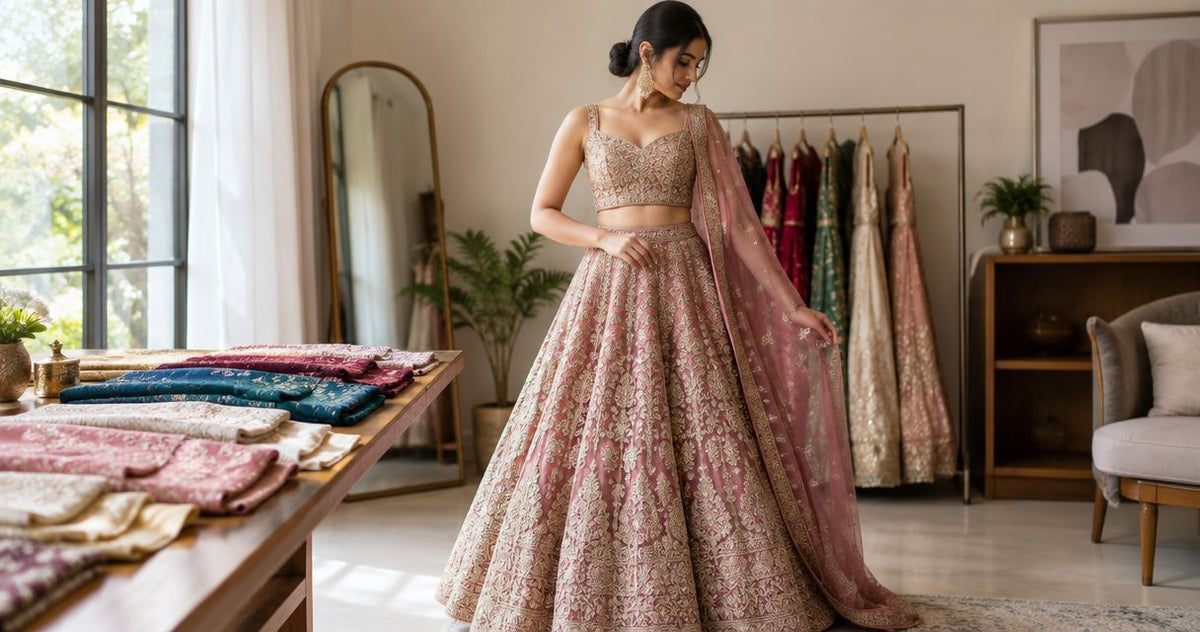
Best overall for a lightly embellished festive lehenga: Mul Chanderi. Best for flowing movement: georgette. Best for a layered, embroidered look: soft net. The best fabric for lehenga depends on the shape you want, the embroidery you choose and the lining underneath; this 2026 guide helps you match those decisions before ordering.
- The best fabric for lehenga is Mul Chanderi for light festive dressing; choose georgette when flowing drape comes first.
- Soft net suits embroidered overlays, while organza suits a more defined flare; both need thoughtful lining.
- Doeraa suits lehenga fabric shoppers seeking embroidered designs across Mul Chanderi, soft net and viscose zari tissue.
- Confirm usable width, embroidery placement and your tailor’s cutting layout before deciding how much fabric to order.
Why this matters
A beautiful embroidered fabric does not decide the finished silhouette on its own. Your lining, skirt panels, waistband and hem support all affect how the lehenga hangs and feels when you sit or walk.
For your 2026 outfit, start with the silhouette rather than the colour. The guide to choosing lehenga fabric by drape and silhouette explains that first decision; the comparison below helps you narrow the fabric itself.
Doeraa is best for lehenga fabric shoppers who want embroidered designs to guide their outfit selection. Choose the base cloth with equal care: embroidery adds character, but it also changes how a fabric folds.
What makes the best fabric for lehenga?
Use these criteria before comparing individual designs. A fabric earns its place when it supports your outfit, not simply because its photograph catches your eye.
- Drape: Decide whether you want falling folds, a softly shaped skirt or a more defined flare.
- Finished weight: Consider embroidery, lining and hem support together, rather than judging the base fabric alone.
- Transparency: Check whether the skirt needs an opaque lining and whether that lining changes the colour impression.
- Embroidery layout: Look for borders, directional motifs and areas that need matching across seams.
- Usable width: Ask how much width remains after accounting for selvedges and any border placement.
- Wear and care: Match the fabric to sitting, dancing, travel and the care instructions for its embellishment.
There is no universal winner for every wedding function. A heavily embellished version of a light base can be less comfortable than a simpler design on a firmer cloth.
Lehenga fabrics at a glance
The order below starts with a versatile festive option, then separates fabrics by the effect they create. These are fabric-type recommendations, not claims that every weave or embroidered design behaves identically.
| Fabric type | Best for | Standout feature | Key limitation |
|---|---|---|---|
| Mul Chanderi with floral embroidery | Lightly embellished festive dressing | An airy, sheer base with decorative detail | Needs a lining decision before cutting |
| Georgette | Flowing movement | Falling folds rather than a crisp outline | Needs support if you want pronounced flare |
| Soft net | Embroidered overlays | Open mesh lets embroidery stand out | Lining determines coverage and much of the final appearance |
| Organza | Defined flare | Crispness helps hold shape | Less suitable for a close-falling skirt |
| Viscose zari tissue with beads and sequins | A luminous evening statement | Shimmer combined with decorative surface work | Dense embellishment needs careful seam planning |
| Satin | A smooth, minimally embellished look | A lustrous surface that shows the cut | Creases and seam impressions need attention |
1. Mul Chanderi: best lehenga fabric for light festive dressing
Mul Chanderi is the starting point when you want embroidery without choosing a visually dense skirt. The supplied product descriptions identify this fabric as lightweight and sheer; the lining therefore belongs in the design discussion from the beginning.
Doeraa’s Prussian blue option names multi-thread floral embroidery and gold sequins. Let those details carry the outfit, then ask your tailor whether the selected cloth supports your preferred panel shape without excessive understructure.
Mul Chanderi pros:
- Suits a festive look built around floral embroidery.
- Offers an airy base rather than an inherently bulky surface.
- Works as a starting point for coordinating a blouse and dupatta.
Mul Chanderi cons:
- Sheerness requires a deliberate lining choice.
- Dense embroidery changes the feel of the lightweight base.
Best for: Your 2026 daytime celebration or family function when you want a lightly embellished appearance.
Verdict: Buy for light festive dressing after your tailor approves the lining and cutting layout.
2. Georgette: best lehenga fabric for flowing movement
Georgette suits a lehenga that falls in soft folds rather than standing away from the body. Its characteristic grainy surface also gives you a different visual effect from smooth satin or crisp organza.
Choose the actual embroidered cloth, not just the fabric name. A sparsely decorated georgette and a densely worked georgette need separate assessments for movement and finished weight.
Georgette pros:
- Supports a flowing skirt silhouette.
- Gives movement without relying on a crisp base.
- Provides a textured alternative to a glossy surface.
Georgette cons:
- Requires added structure for a strongly flared outline.
- Semi-sheer versions need suitable lining.
Ask to see how the fabric hangs in a loose fold, not only laid flat. A close-up explains the embroidery; a hanging view better explains the drape.
Best for: A sangeet or reception outfit where falling folds matter more than a sculpted shape.
Verdict: Buy for movement; skip georgette if you want the base fabric itself to hold a pronounced flare.
3. Soft net: best lehenga fabric for embroidered overlays
Soft net places embroidery over an open mesh background. The lining becomes part of the visible design: a tonal lining creates a different effect from a contrasting one.
For a 2026 wedding outfit, judge the complete combination rather than the net alone. Beads, sequins and threadwork can change its weight, and the underside deserves attention wherever it sits close to skin.
Soft net pros:
- Makes embroidered motifs a focal point.
- Suits layered skirt designs.
- Allows the lining colour to shape the overall look.
Soft net cons:
- Needs opaque backing where you want coverage.
- Mesh and embellishment require care around jewellery and rough surfaces.
Do not assume that every soft net design has the same softness or embroidery density. Ask about the specific piece and discuss finishing at the waist and seams.
Best for: A layered lehenga with visible floral, leafy or geometric embroidery.
Verdict: Buy when you want an embroidered overlay and have settled the lining first.
4. Organza: best lehenga fabric for defined flare
Organza is the choice when you want a crisper outline instead of a skirt that closely follows your movement. Its sheer construction also makes the underlayer visually important.
Keep the embroidery layout in mind when planning panels. A motif that looks balanced on an uncut length needs positioning so the finished skirt does not lose its rhythm at the seams.
Organza pros:
- Helps create a defined, shaped silhouette.
- Gives folds a crisp appearance.
- Provides a sheer ground for decorative embroidery.
Organza cons:
- Is not the default for a close-falling skirt.
- Needs careful pressing and seam finishing.
Ask your tailor to demonstrate a fold with the proposed lining beneath it. That small check explains the likely outline more clearly than a photograph of fabric spread on a table.
Best for: A lehenga where the flare is a deliberate part of the design.
Verdict: Buy for shape; skip organza when your priority is fluid drape.
5. Viscose zari tissue: best lehenga fabric for evening shimmer
Viscose zari tissue brings a shimmering surface to the outfit. The beige-and-gold design listed by Doeraa combines beads, sequins, zari and multi-thread embroidery, making it a decorative option rather than a plain foundation.
Judge embellishment separately from the base cloth. A description of lightweight tissue does not tell you the finished weight of a fully embroidered skirt.
Viscose zari tissue pros:
- Creates a luminous evening appearance.
- Combines surface sheen with embroidery.
- Suits an outfit with one strongly decorative focal fabric.
Viscose zari tissue cons:
- Beads and dense embroidery complicate seam placement.
- Translucent versions require lining and coverage checks.
For your 2026 evening outfit, decide whether the skirt or blouse will carry the heavier decoration. That choice helps you avoid selecting every component independently and discovering that the finished outfit feels visually crowded.
Best for: An evening lehenga built around shimmer and decorative surface work.
Verdict: Buy after checking seam positions, lining and the weight of the complete design.
6. Satin: best lehenga fabric for a smooth, simple finish
Satin is a weave, not a fibre composition. Its smooth, lustrous face suits a lehenga where colour, cut and folds do more of the work than all-over embroidery.
Check the particular cloth before choosing your silhouette. Satin fabrics differ in body and drape, so the name alone does not establish whether a piece will fall softly or hold a firmer shape.
Satin pros:
- Gives a smooth surface with visible lustre.
- Suits a minimally embellished skirt.
- Creates contrast beside an embroidered blouse or dupatta.
Satin cons:
- Surface sheen draws attention to creases and seam impressions.
- The weave name does not establish fibre content or comfort.
Request the composition and care details for the selected fabric. Do not treat a glossy photograph as evidence of softness, opacity or a particular fibre.
Best for: A colour-led lehenga with restrained surface decoration.
Verdict: Buy when you want the cut to lead; wait until the specific satin’s drape is confirmed.
Two embroidered fabrics to consider
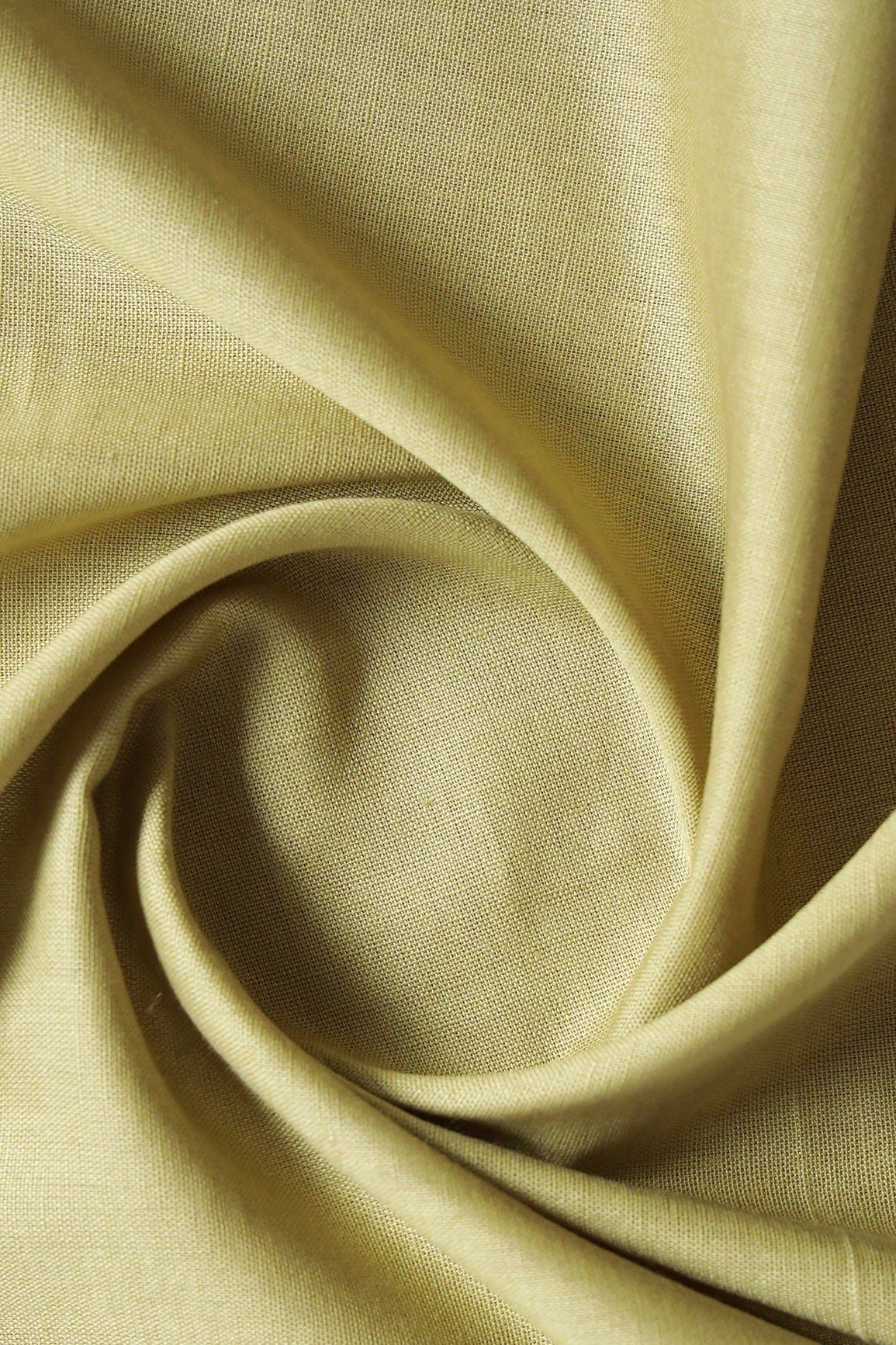
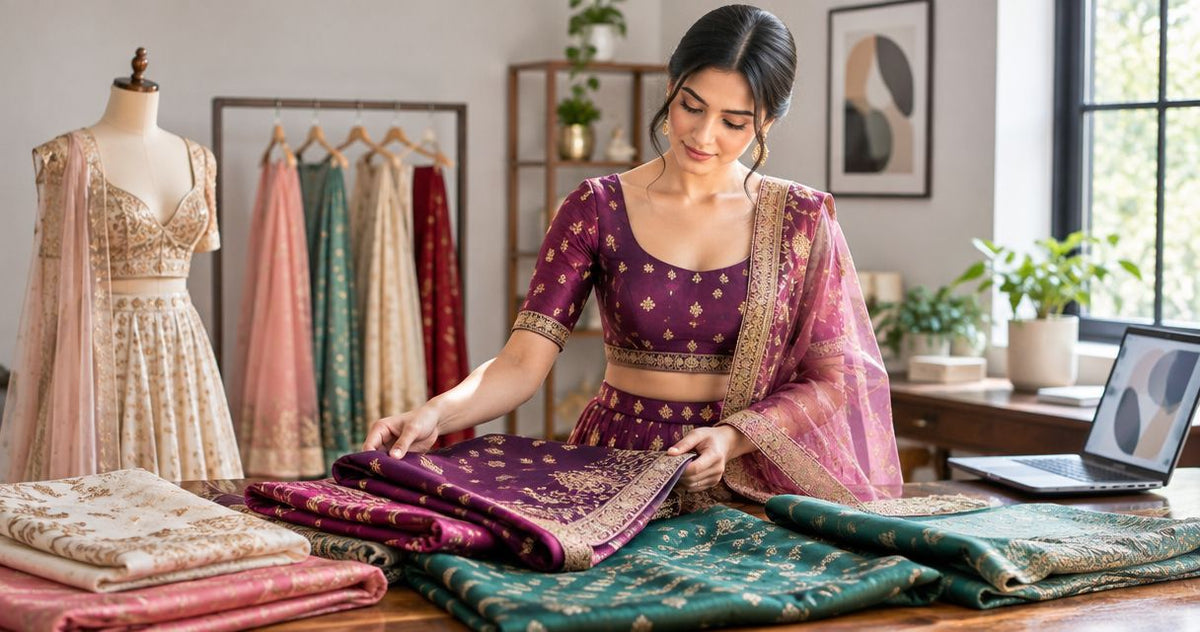
These Doeraa lehenga fabric options represent different directions: floral Mul Chanderi for an airy festive base, and embellished viscose zari tissue for evening shimmer. Choose between those effects before choosing a colour.


How to choose the quantity before ordering
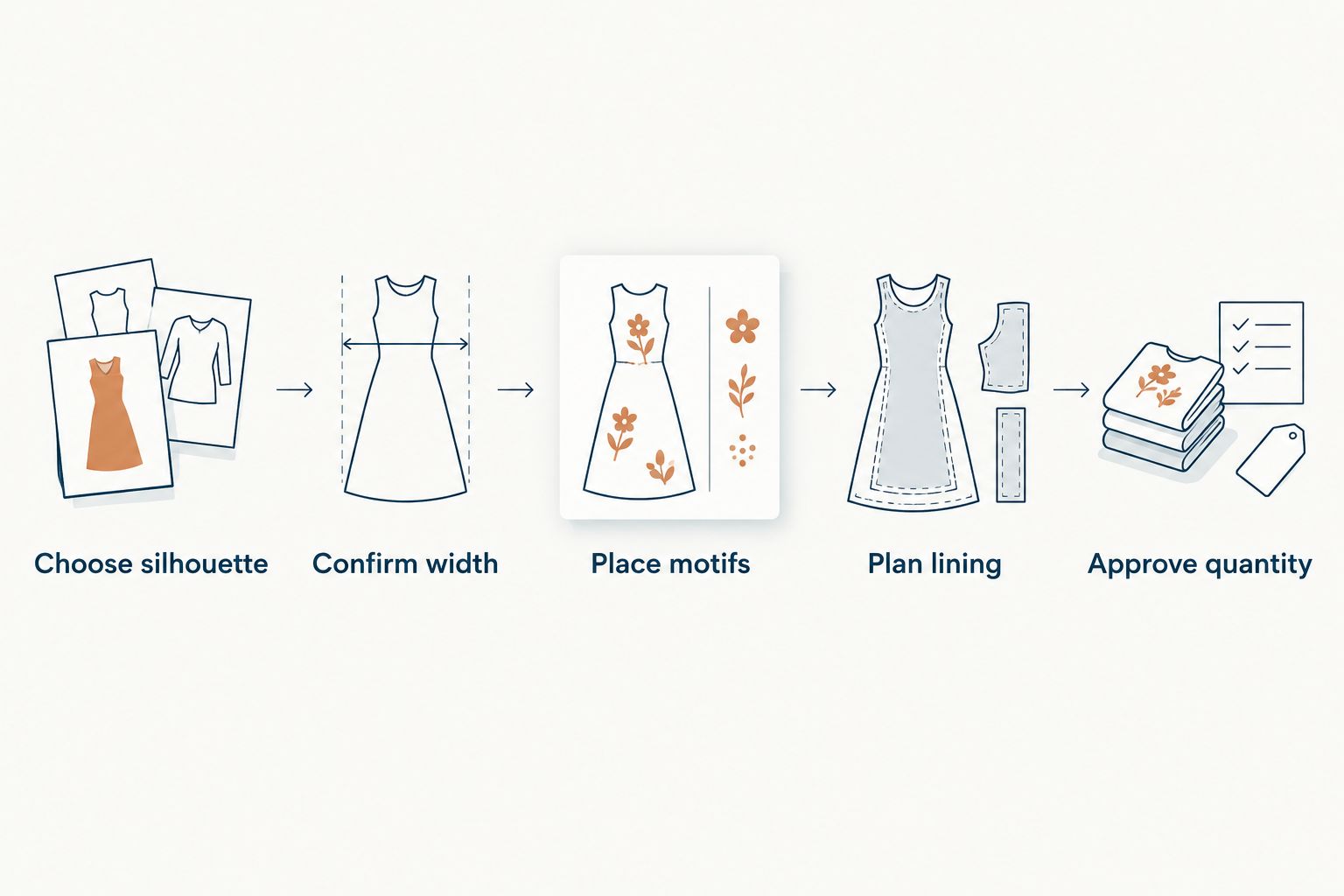
Order against a cutting layout, not a generic lehenga metre estimate. Your height, waist, skirt length, flare, panel arrangement and fabric width all influence the quantity.
Work through these decisions with your tailor:
- Choose silhouette: Set the skirt shape and intended flare.
- Confirm width: Establish usable fabric width and border position.
- Place motifs: Mark directional embroidery and any matching across panels.
- Plan lining: Select coverage, colour and the support the skirt needs.
- Approve quantity: Include the blouse and dupatta only if they use the same cloth.
A fixed cut piece is not automatically enough for a complete lehenga. The supplied listings include a 0.75 metre organza piece, a 3.75 metre soft net piece and a 5.25 metre soft net piece; those lengths describe individual cuts, not universal outfit requirements.
For boutiques planning a 2026 order, record the selected design, required continuous lengths and quantities for each garment separately. Ask about repeat-order requirements before committing a design to a wider collection.
What product photographs should help you check
Look for a full-width view, an embroidery close-up and a view that explains the border. Together, they help you understand motif scale and placement rather than judging the fabric from colour alone.
A screen cannot guarantee an exact colour match. Before stitching, assess the actual fabric beside the proposed lining, blouse material and dupatta in suitable light, and follow the stated care guidance before any preparation treatment.
How these fabrics were ranked
The ranking prioritises outfit suitability: drape, transparency, embroidery layout and the work needed to achieve the intended silhouette. Mul Chanderi is the default for light festive dressing; the remaining choices each serve a distinct visual or practical purpose.
This is a selection guide, not a wear-test ranking. The recommendation concerns the fabric type, while your final decision belongs to the specific cloth and garment plan.
Which lehenga fabric should you choose?
Choose Mul Chanderi if you want a starting point for a lightly embellished festive lehenga. Switch to georgette for flowing movement, soft net for embroidered layers or organza for a defined flare.
Choose viscose zari tissue when shimmer leads the design, and satin when you want a smooth, simpler surface. For any of these options, settle the lining and cutting layout before ordering the outer fabric.
FAQ
What is the best fabric for lehenga in 2026?
Mul Chanderi is the default recommendation for a lightly embellished festive lehenga in this guide. Georgette is the better choice for flowing movement, while organza suits a more defined flare.
Is georgette better than net for a lehenga?
Georgette is better for falling folds; soft net is better for an embroidered overlay. Net also makes the lining a more visible part of the finished design.
Which lehenga fabric should I choose for a daytime function?
Start with lightly embellished Mul Chanderi for a daytime festive outfit. Assess the lining and embroidery as well as the base cloth, because they influence the finished garment’s weight and feel.
Does organza give a lehenga more flare?
Organza helps create a crisper, more defined outline than a fluid fabric such as georgette. The final flare still depends on the cut, lining and any added support.
How many metres of fabric do I need for a lehenga?
Your tailor’s cutting layout should determine the quantity. Skirt length, flare, usable width, borders and directional embroidery prevent a single metre estimate from fitting every design.
Can I make a complete lehenga from a cut piece?
A cut piece works only if its length and usable width accommodate your approved pattern. Check the skirt, blouse and dupatta requirements separately rather than assuming the listed length covers the whole outfit.
Can I choose the lining after buying embroidered fabric?
Choose the lining before finalising the garment plan, particularly for net, organza and sheer Mul Chanderi. Lining affects coverage, colour impression and how the skirt hangs.
What should a boutique confirm before ordering lehenga fabric in bulk?
Confirm the selected design, usable width, required continuous lengths and quantity for each garment. Discuss repeat-order needs and embroidery placement before committing the fabric to a collection.
One last thing
Turn the fabric sideways before approving the cutting plan. Directional flowers, chevrons and borders do not necessarily work when panels are rotated to save cloth; checking orientation protects the design you chose in the first place.


Leave a comment
This site is protected by hCaptcha and the hCaptcha Privacy Policy and Terms of Service apply.