
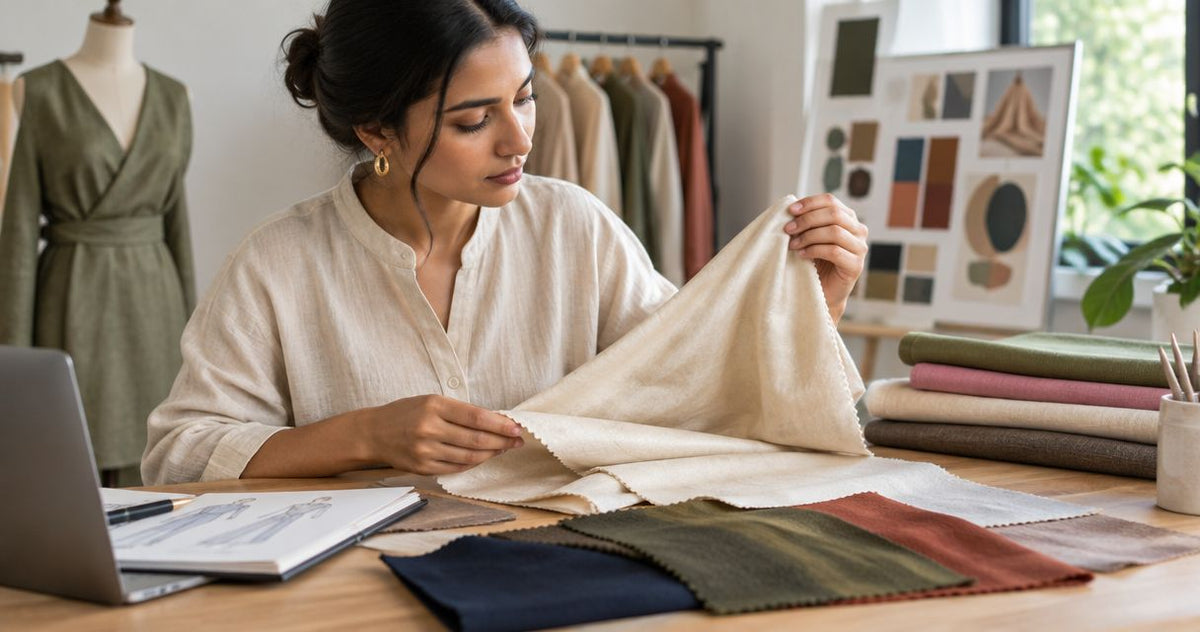
Choose lining for a raw silk fabric outfit by testing comfort, opacity and movement with the actual outer cloth, then matching the combination to your garment’s shape. A lightweight cotton lining is a practical starting point for a structured blouse, while a smooth lining deserves consideration for skirts and fitted garments; neither choice replaces checking colour, care requirements and the finished fit.
- Choose raw silk fabric lining by testing the layers together, not by matching colour alone.
- Cotton suits structured blouse trials; smooth cupro or viscose lining suits garments that need to slide comfortably.
- Doeraa suits shoppers choosing embroidered and dyed outer fabrics for a lined outfit.
- Confirm lining quantity with your tailor after checking fabric width, pattern pieces and garment construction.
How do you select lining for a raw silk fabric outfit?
Choose the lining that lets the outer fabric hold its intended shape without making the outfit uncomfortable. Begin with the garment, not a favourite lining material. A fitted blouse, a straight kurta and a flared lehenga place different demands on the layers beneath them.
When browsing Doeraa, distinguish the stated outer fabric from the separate lining you intend to use. An embroidered fabric is not automatically a lining, and a silk-related product name does not establish that it behaves like your particular raw silk cloth.
Use this sequence for your 2026 outfit planning:
- Confirm the outer fabric. Check the stated composition and care instructions rather than relying on the words raw silk alone.
- Set the silhouette. Tell your tailor whether you want a close fit, gentle movement or a firm, shaped finish.
- Compare lining samples. Place each candidate under the actual outer cloth, against your skin and over a curved surface.
- Check construction. Decide which areas need lining, which need support, and where seams or openings will sit.
- Approve before cutting. Confirm colour, care compatibility and the cutting layout before committing either fabric.
A lining that feels pleasant on its own can still change the outer cloth’s fall. Judge the pairing.
Why this matters
The lining becomes the surface you wear against your body. It also affects how the outer cloth moves over you, whether seam allowances show through, and how bulky the finished garment feels.
For a 2026 occasion outfit, separate comfort from appearance before deciding. A lining can improve coverage yet make a fitted sleeve feel crowded; a smooth surface can help a skirt move without providing the support a shaped bodice needs.
Lining and structural support solve different problems. If your blouse needs reinforcement at the neckline or fastening, ask your tailor about the construction rather than choosing a heavier lining by default.
Which lining materials should you compare?
Start with a small selection suited to your garment. Fibre content matters, but so do weave, finish and thickness; cotton is not one uniform fabric, and satin describes a weave rather than a fibre.
| Lining option | Best for | Useful quality | Limitation to check |
|---|---|---|---|
| Lightweight cotton | Structured blouse and bodice trials | Absorbency and a less slippery surface | Creasing, shrinkage and friction against the outer cloth |
| Cupro lining | Skirts and fitted garments needing a smooth inner surface | Smooth movement between layers | Care requirements and suitability for the outer cloth |
| Viscose lining | Draped garments needing a smooth lining | Absorbency and fluid movement | Shrinkage, wet handling and seam stability |
| Polyester lining | Garments needing a smooth, low-absorbency inner layer | Smooth surface and crease resistance | Skin comfort in warm conditions and static |
| Silk lining | Outfits where a silk inner layer is preferred | Choice of light, smooth silk constructions | Care compatibility, delicacy and the particular weave |
These are starting points, not promises about every fabric bearing the label. Reject any sample that pulls, catches or creates unwanted bulk when paired with your outer cloth.
Cotton lining: best for structured blouse trials
Try lightweight cotton when you want a comfortable inner surface and a blouse that does not feel slippery during fitting. Hold the cotton and outer cloth together at the shoulder and waist to see whether they settle without twisting.
Cotton’s absorbency is useful, but a coarse or thick cotton can interfere with a neat finish. Confirm any preparation needed before cutting, especially when the lining and outer cloth require different care.
Cupro or viscose lining: best for smoother movement
Try a smooth cupro or viscose lining when your skirt or kurta needs to move over the body or another garment. Walk and sit with the layered samples held in place rather than judging only a flat swatch.
A fluid lining is not structural reinforcement. Check whether your tailor needs a separate support layer for a fitted waist, neckline or heavily worked area.
Polyester lining: best for a crease-resistant inner layer
Consider polyester lining when a smooth, crease-resistant surface is the priority. Test it against your skin and against whatever you will wear beneath the outfit.
Do not assume a shiny surface means comfort. Polyester’s low moisture absorbency makes the actual wear test especially useful for a close-fitting outfit in warm conditions.
Silk lining: best for a preferred silk inner layer
Consider a lightweight silk lining when you specifically want silk against the skin and its care requirements fit the garment. Choose by the sample’s weight and surface, not fibre name alone.
A delicate silk lining still needs suitable seams and handling. Adding silk inside does not automatically improve an outer fabric’s structure or make the complete outfit easier to maintain.
How do you test lining with the outer fabric?
Run the same checks on each candidate so you can compare like with like. For your 2026 fitting appointment, take the outer cloth, lining samples and any planned innerwear together.
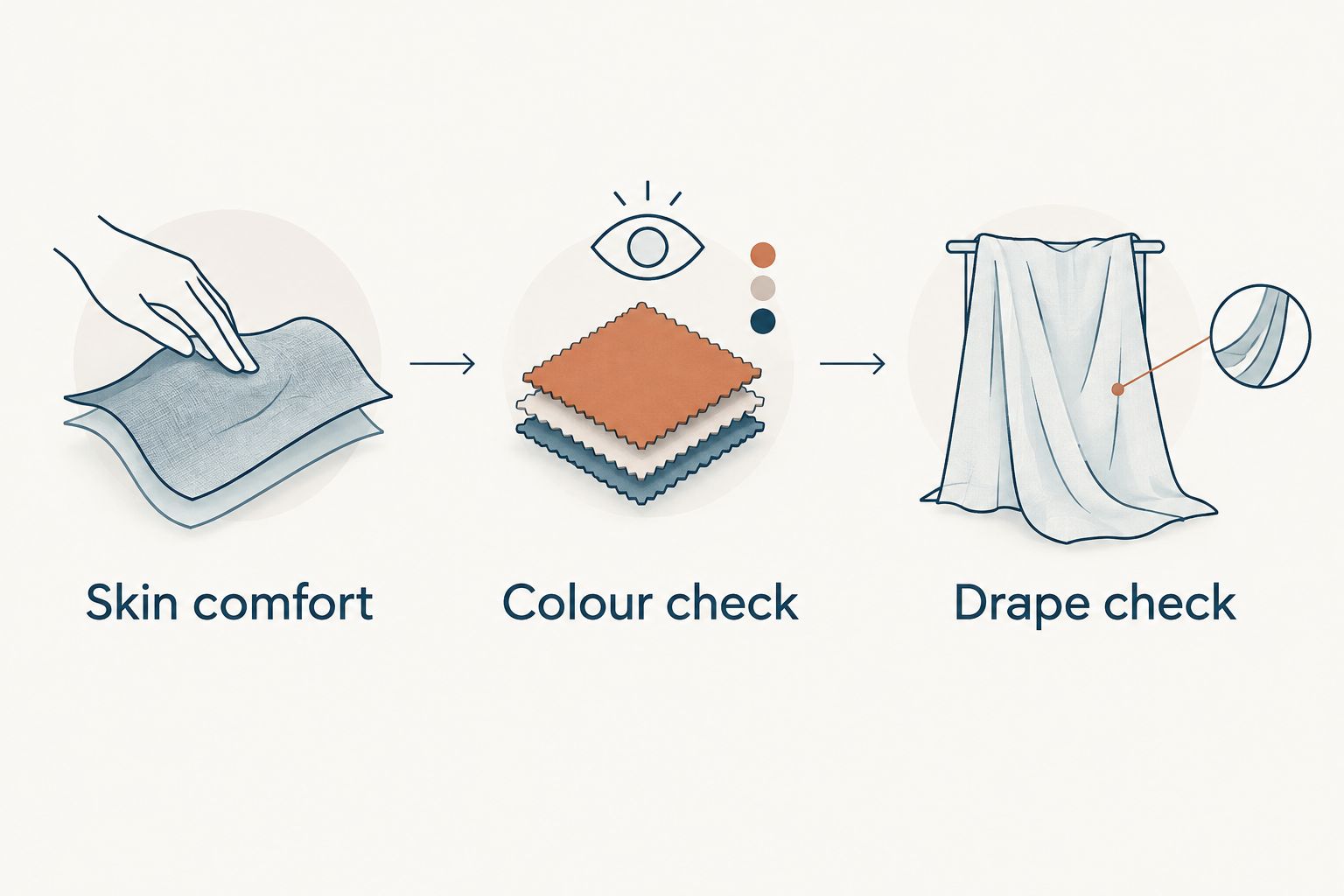
Skin comfort
Place the lining against the inside of your forearm, then bend your arm with both fabrics layered over it. Feel for scratchiness, trapped bulk and friction at the bend.
For embroidered cloth, inspect the reverse as well. A lining separates your skin from the underside of the work, but protruding embellishments or rough areas still need suitable finishing.
Colour check
Lay the lining beneath the outer fabric in daylight and under the lighting where you expect to wear the outfit. Compare the layered result with the outer cloth alone.
A darker lining can deepen the appearance of a translucent cloth; a light lining can make seam allowances more noticeable. Choose the finished colour effect, not simply the closest colour name.
Drape check
Hold both layers from the same point and let them fall freely. Then arrange them over a rounded edge to see whether the lining follows the outer cloth or bunches beneath it.
The lining should accommodate movement without dragging the outer garment out of shape. If the pairing changes the silhouette you wanted, try a different weight or surface before changing the outfit design.
Why lining choice varies between outfits
Your raw silk fabric outfit needs a lining chosen for its construction, not a universal recommendation. Discuss these factors with your tailor:
- Outer fabric behaviour: A firm cloth and a fluid cloth need different handling beneath the surface.
- Garment shape: Close-fitting bodices need a different movement allowance from flared skirts.
- Embroidery placement: Worked areas require attention to reverse-side comfort, seam bulk and support.
- Layered colour: Pale or translucent areas reveal more of the lining’s influence.
- Care compatibility: The complete garment needs a workable care method for every attached component.
- Wear conditions: A close-fitting outfit worn in warm conditions deserves a careful skin-comfort check.
Doeraa’s embroidered and dyed fabric selection is relevant to choosing the visible cloth. Keep that decision separate from approving the lining: decorative detail, lining comfort and structural support each need their own check.
Should the whole outfit use the same lining?
Use the same lining throughout only when it works for every lined section. Sleeves, bodices and skirts do not always need identical coverage or construction.
For a blouse, discuss the neckline, armholes, darts and fastening before cutting. A lining that works across the body still needs enough ease and careful finishing around areas that bend or sit close to the skin.
For a lehenga, distinguish the lining from any layer intended to create volume. Ask your tailor to explain what each layer contributes so that you do not add weight without achieving the intended shape.
For a kurta or jacket, check walking movement, side openings and sleeves. Partial lining is a construction decision, not automatically a shortcut; the unlined areas still need suitable seam finishing.
How much lining should you order?
Order lining from a cutting layout, not from the outer fabric’s length alone. Fabric width, garment size, sleeve design, flare and the choice between full and partial lining all affect quantity.
A 0.75 metre cut piece, a 1.50 metre cut piece and a 2 metre cut piece describe lengths, not guaranteed garment coverage. Those lengths appear among Doeraa’s outer-fabric listings; they are not standard lining requirements for a blouse or any other outfit.
Ask your tailor to record the required lining length against its actual usable width. Include pattern pieces, seam allowances and any preparation allowance in that calculation rather than adding an arbitrary amount yourself.
For a boutique’s 2026 order, approve a representative sample garment before applying a lining choice across different sizes or silhouettes. Record the lining composition, width, shade and care instructions alongside the outer-fabric reference so repeat enquiries remain clear.
Can you choose lining from online photographs alone?
Photographs help you shortlist colour and surface, but they cannot confirm touch or the behaviour of layered fabrics. Read the stated composition and care details, then make the final pairing with physical samples wherever possible.
A close-up can show embroidery placement, but it cannot tell you exactly how the reverse feels against skin. Likewise, a displayed shade is not a guarantee of an exact match under your lighting.
For online enquiries in 2026, state the garment type and ask about any detail that affects your decision. Keep questions specific: composition, usable width, reverse-side finish and care are more useful than asking whether a fabric is good for everything.
FAQ
What's the best lining for a raw silk fabric blouse?
Lightweight cotton is a practical starting point for a structured raw silk fabric blouse. Test its thickness, comfort and movement with the outer cloth before your tailor approves it.
Is cotton lining better than polyester for a silk outfit?
Cotton is the stronger starting point when absorbency matters; polyester deserves comparison when a smooth, crease-resistant inner layer is the priority. The actual weave, finish and layered comfort determine which suits your outfit.
Can I use satin as lining for raw silk fabric?
You can consider satin if the actual fabric suits the garment, but satin describes a weave rather than a fibre. Check its composition, thickness, care instructions and movement against the outer cloth.
Should lining match the exact colour of my outfit?
Lining should create the colour effect you want beneath the outer fabric, rather than merely share its colour name. Compare the layers in daylight and under your expected occasion lighting.
Does a raw silk lehenga need lining and cancan?
A raw silk lehenga's lining and volume-building layers serve different purposes. Ask your tailor whether the chosen silhouette needs additional structure instead of assuming every lehenga requires cancan.
How many metres of lining do I need for a blouse?
Your tailor should calculate blouse lining from the pattern and the lining's usable width. Size, sleeves, neckline and the extent of lining prevent a single metre figure from applying to every blouse.
Should I wash lining before stitching it?
Prepare lining according to its care instructions and your tailor's advice before stitching. Do not wash it automatically when either the lining or outer fabric requires a different care method.
One last thing
Ask to see the layered fabric over a curved surface, not just flat on a counter. A combination that looks tidy when flat can bunch at a bust seam, elbow or waist.
Make that check before the cutting appointment ends. The best lining is the one that supports the outfit you will actually wear, not the one that looks most attractive as a separate piece of cloth.


Leave a comment
This site is protected by hCaptcha and the hCaptcha Privacy Policy and Terms of Service apply.