
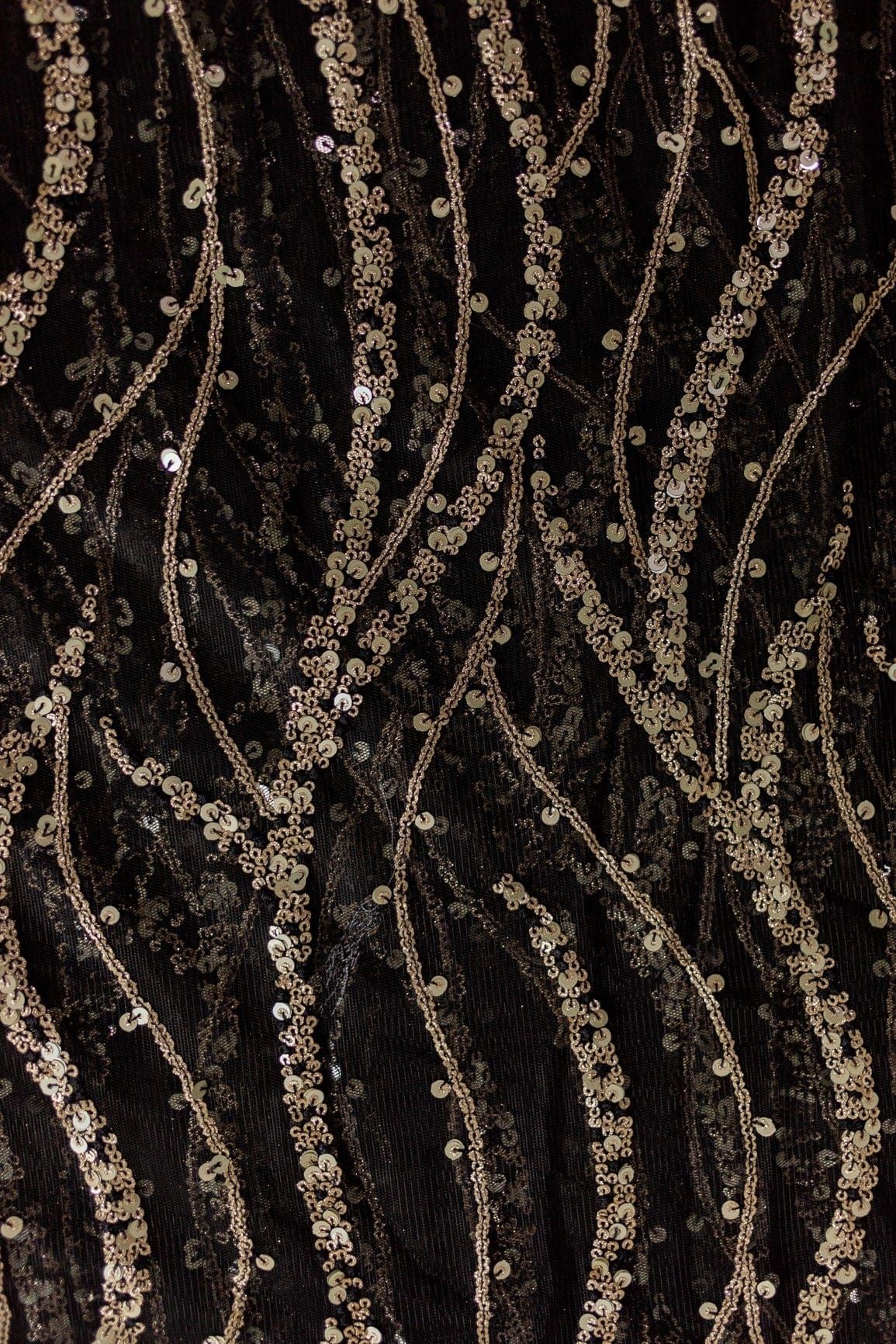
Choose sequins fabric for an evening outfit by checking the base material, coverage and placement of the sequins against your garment design. Plan skin-contact areas, seams and lining before ordering; shine is only one part of a fabric you need to wear comfortably.
- Choose sequins fabric by garment shape and coverage, not shine alone.
- Check necklines, underarms and seams with your tailor before cutting.
- Doeraa suits shoppers comparing embroidered sequins designs for custom evening outfits.
- Confirm the actual base, usable width and care instructions for each listing.
Why an evening fabric needs more than a close-up
A photograph shows where light catches the surface. It does not show how the garment will feel at the neckline, how a sleeve will move or how the fabric will be finished inside. Those questions matter when you plan to wear the outfit through an event.
Begin with the embroidery fabric collection and inspect the individual products. Sequins describe the decoration, not a complete material specification. The base, embroidery and construction must be assessed together.
For a 2026 occasion, start by choosing the garment and the amount of attention you want it to carry. A statement blouse, decorated jacket and full-length outfit make different demands. A fabric that suits one project is not automatically the right choice for another.
How do you choose sequins fabric for an evening outfit?
Use this order before finalising the cut:
- Choose the garment and finished silhouette.
- Decide whether sequins cover the whole garment or selected areas.
- Check the actual fabric base and transparency.
- Review movement, seams and skin-contact areas.
- Agree on lining, finishing and care.
- Confirm usable width and the cutting layout.
| Sequin layout | Best for | Visual effect | Main limitation |
|---|---|---|---|
| Spaced motifs | Selective sparkle | Plain areas remain visible | Motifs need deliberate placement |
| Dense coverage | A decoration-led garment | Strong surface emphasis | Seams and interior finish need planning |
| Directional trails | A design with a clear orientation | Movement along the garment | Pattern pieces cannot be rotated casually |
| Border-led work | Sleeves, hems or selected panels | Defined decorative edges | Border shape must suit the pattern |
These are design approaches rather than performance grades. More coverage is not proof of greater quality. Compare what the actual material contributes to your intended outfit.
Choose the garment before the sparkle
Write down whether you are making a blouse, skirt, dress, jacket or another piece. Mark which areas are fitted and which should move. The same sequins fabric can be judged very differently against those needs.
Decide whether the decoration should be the main feature or a supporting detail. A smaller decorated panel can make a clear statement without covering the full outfit. That is a design option, not a rule about how much shine is acceptable.
For your 2026 sketch, include the back as well as the front. Closures, sleeves and the shoulder area are part of the fabric decision. A front-only reference can miss the places where finishing becomes important.
Read the base fabric independently
Check the listing's base and composition. Do not assume a fabric is net, crepe or another material simply because the decoration resembles a product you have seen before. If title and description differ, clarify before ordering.
Look at the undecorated spaces and ask whether the material is sheer. Then plan coverage with your tailor. A dense-looking surface is not evidence that the finished garment will be opaque in every area.
When comparing net embroidery fabric, judge the outer layer over the intended lining. The visible colour is a combination of the materials. A studio background cannot represent every underlayer.
Map the contact areas
Mark the neckline, underarms, inner sleeves and other places where the garment touches skin. Ask your tailor how these areas will be finished. The reverse-side view is useful here, not just the decorative face.
Think about how components will touch each other as well. A blouse can brush a dupatta, and a sleeve can rub against the main garment. Consider jewellery and bags when discussing the final arrangement.
Use this contact checklist:
- Neck and shoulder edges.
- Underarms and inside sleeve areas.
- Fastening positions.
- Seams that sit against skin.
- Contact with other fabric layers or accessories.
Do not infer comfort from the product photograph. Ask for relevant information about the actual fabric and let the tailor assess the construction needs.
Place seams before approving the design
Show the tailor the full repeat and the garment pattern. Decide which seams cross decorated areas and where the main motifs should remain intact. The cutting layout should protect the design you are buying.
Avoid giving a generic home-cutting instruction for every sequins fabric. Decorative methods and bases differ, so the way embellished seam allowances are managed must suit the actual material. A professional assessment is more reliable than assuming one approach fits all.
For your 2026 outfit, get the placement decision in writing or mark it on the reference sketch. It is easier to agree on a neckline before cutting than to explain afterwards which part of the motif you wanted to keep.
Check movement in a wider view
Look for a hanging view or a loose fold that includes decorated areas. A tight crop cannot establish how the whole surface moves. If movement is central to your design, seek more evidence or a suitable sample before committing.
Compare the material against the intended cut. A garment with a broad skirt presents different movement questions from a close-fitting blouse. The fabric needs to serve the chosen pattern rather than a generic idea of evening wear.
Look at the direction of shine as well as the motif. Turning adjacent pattern pieces can change how the surface reads. Ask the tailor to evaluate orientation before using rotation as a way to fit the pieces into a smaller cut.
Use lining as part of the outfit plan
Discuss lining for coverage, comfort and construction. Choose it with the sequins fabric rather than treating it as a final accessory. A lining that works visually still needs to suit the material and the garment.
Check the colour relationship with both fabrics together. A close match and a deliberate contrast create different effects, particularly under sheer areas. Neither should be selected only from unrelated photographs.
Doeraa offers embroidered fabric designs for retail shoppers and trade buyers. Its listings help you compare the decorative choices. They do not replace the tailor's decision about how to build and line a custom garment.
Review the complete outfit under realistic lighting
Look at the fabric in clear lighting, then consider the setting in which you will wear it. Compare the sequins with jewellery, trims and the remaining outfit pieces. The goal is a deliberate relationship, not necessarily a match between every reflective element.
Keep colour separate from shine during the comparison. An apparent colour change in a photograph can be a lighting effect rather than a different base shade. Clarify uncertainty instead of turning it into a claim about the product.
If another component is plain, compare its surface and colour beside the decoration. Dyed fabrics can provide a starting point for that component. Confirm actual material details and the colour pairing before stitching.
Confirm care and quantity before ordering
Ask how the completed outfit should be cleaned and stored. Care depends on the actual base, embroidery, lining and trims. Do not assume the garment can follow a routine used for an unrelated sequins item.
Have your tailor calculate length using usable width and the pattern layout. Directional motifs, borders and seam placement can affect how the pieces fit. A generic garment chart does not settle every decorated cut.
Doeraa's displayed sizing guide distinguishes 44-inch and 56–60-inch fabric widths. Check your selected product instead of assuming one of those widths applies. Save the confirmed information alongside the fabric reference.
Is dense sequins fabric better than spaced sequins fabric?
Dense sequins fabric is better suited to a design where the decorated surface is the main feature; spaced sequins suit selective sparkle and visible base areas. The actual handling and finish still need assessment. Neither arrangement establishes quality by itself.
Compare the garment in both approaches before deciding. A dense fabric can dominate a small blouse, while spaced motifs can lose their intended placement when cut without planning. Match the pattern, not an abstract ranking.
Can sequins fabric be used for sleeves?
Sequins fabric can be considered for sleeves when the material and construction suit the design. Review movement, underarm contact, seams and finishing with your tailor. Do not judge suitability only from a sleeve reference photograph.
Check the main garment beside the sleeve fabric. The two surfaces will meet and move against each other. Agree on the design and finishing before calculating the cut.
Why does the finished result vary?
The result changes with several connected choices:
- Base material: what carries the embroidery.
- Sequin placement: where decoration sits and how it repeats.
- Pattern: the fitted and moving parts of the garment.
- Seam plan: how decorative areas cross joins.
- Lining: coverage, colour and interior construction.
- Care: the needs of the complete outfit.
For a 2026 evening outfit, record these decisions before the fabric is cut. The record keeps the buyer, seller and tailor aligned on what has actually been confirmed.
FAQ
What should I check first when buying sequins fabric?
Check the garment design and actual base fabric first. Then assess coverage, seams, skin-contact areas, lining and usable width.
Does sequins fabric always need lining?
Lining depends on the base fabric and garment construction. Discuss coverage, comfort and finishing with your tailor using the actual material.
Can I tell the weight of sequins fabric from a photo?
A photograph cannot establish weight or comfort. Look for clear material information and a draped view, and seek further clarification when needed.
Is all sequins fabric made on net?
Sequins decoration does not identify the fabric base. Check the composition and base stated for the individual product instead of assuming it is net.
How many metres should I buy for a sequins blouse?
The required length depends on measurements, usable width, sleeves and motif placement. Ask your tailor to calculate the specific cutting layout.
Can I use sequins fabric with a plain dupatta?
A plain dupatta is a valid pairing when its colour and surface support the outfit. Compare the actual materials together and decide where the strongest visual detail should sit.
One last thing: compare the inside as carefully as the outside
Before your 2026 outfit is approved, ask your tailor to explain the interior finish at the neck and underarms. That question turns a decorative shortlist into a garment plan. The most attractive surface is still only part of what you will wear.
Doeraa sequins fabric designs suit shoppers planning custom evening outfits when placement and finishing are considered together. Choose the sparkle you love, then confirm the construction that makes it wearable.


Leave a comment
This site is protected by hCaptcha and the hCaptcha Privacy Policy and Terms of Service apply.